Watching the Jackals: Daniela Richterová on revolutionaries and terrorists in pre-‘89 Prague
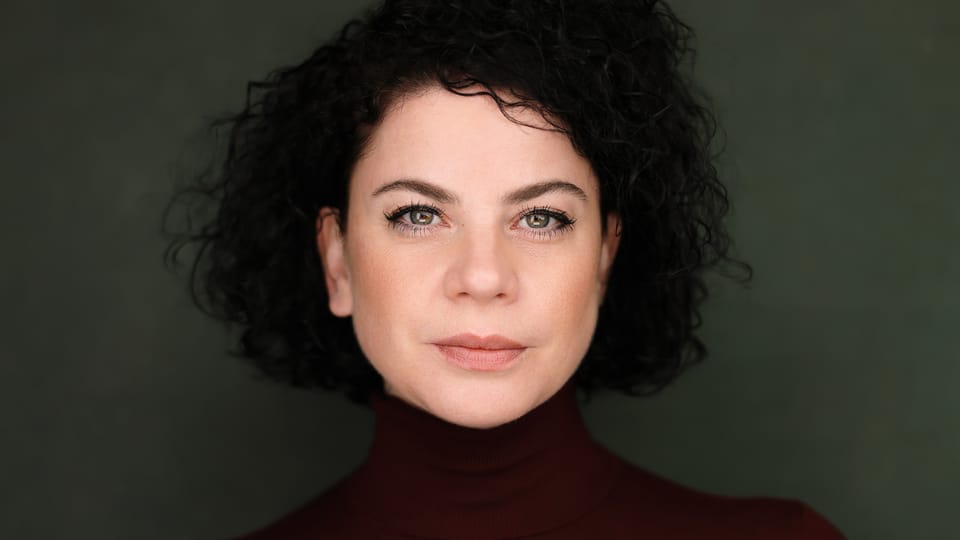
A new book reveals the untold story of Czechoslovakia’s complex relations with terrorists and revolutionaries from the Middle East and elsewhere in the Cold War period. Watching the Jackals by historian Daniela Richterová draws on intelligence files to show how major figures such as Carlos the Jackal, Che Guevara and a mastermind of the 1972 Munich Olympic massacre visited Prague, often repeatedly, in the latter decades of the communist era. It also explores Czechoslovakia’s own attitude to international terrorism. I discussed her groundbreaking findings with Richterová, who is based at King’s College London.
Your book looks at the fascinating links between Czechoslovakia and Cold War terrorists and revolutionaries. When, and why, did Czechoslovakia become active in this area?
“Czechoslovakia became active in this in the late ‘50s and 1960s, when there were a number of national liberation movements, various changes happening, especially in Africa but also in other parts of the world, where, under Nikita Khrushchev, the Soviet Union launched a more activist foreign policy.

“Part of that foreign policy and approach to the world was to support these national liberation movements.
“So in the late ‘50s, early ‘60s, Czechoslovakia is approached by a number of these groups. For instance, the African National Congress had its own armed wing called uMkhonto weSizwe and they came to Czechoslovakia – in very small numbers, but still they were trained on Czechoslovak territory in things like sabotage, using TNT, partisan warfare.
“Then there were others, groups from Guinea Bissau and other parts of the Global South. So it really begins during the 1960s, during the ‘decade of Africa’.”
At the beginning of the 1960s Prague gave a lot of support to Cuba – and it even allowed the Cubans to run their own network under which people entered and left Czechoslovakia without the country’s authorities knowing who they were.
“Yes, that sounds fascinating, doesn’t it? I mean especially to us, who I guess have been taught for years that the Czechoslovak communist regime and the State Security service, the StB [secret police], knew about everything that was going on on this territory.
“The StB is really less in charge of what’s going on on its territory when it comes to these international actors.”
“I think that’s one of the types of stories that keep on reappearing in this book: The StB is really less in charge of what’s going on on its territory when it comes to these international actors.
“One of the examples of this is something called Operation Manuel, which was an approximately eight-year operation which took place in the 1960s. Basically Czechoslovakia during this time enabled the Cubans to transport various revolutionaries, either from Latin America – places like Brazil, Venezuela or Colombia – or even some from the Middle East through its territory.
“This was important for Cuba, because this was after the Cuban Missile Crisis and after Cuba was kind of cut off and heavily sanctioned. So there weren’t many communication lines and flight routes going to and from the island – and one of these flight paths was through Prague.
“Prague was therefore a good place through which these revolutionaries could really go back to their lands and try to stage revolutions, try to stage insurgencies; to really be able to deny the fact that they were in Cuba they needed to change documents, in Prague.
“But it was a very complicated relationship, because the Cubans had different ways, the Cubans had different objectives, and also these revolutionaries were often quite unruly.
“Czechoslovakia enabled the Cubans to transport various revolutionaries, either from Latin America or even some from the Middle East, through its territory.”
“Some of them even defected and then basically told the world that Czechoslovakia played an important role and became what I call a logistical lifeline to this revolutionary training programme in Cuba.”
Was it under this operation that Che Guevara came incognito to Czechoslovakia in 1966, heavily disguised, and stayed for four months?
“We don’t know if this was specifically part of the operation, but what I would say, based on what we know, is that he came here during the time that this operation was in place. So it wouldn’t have been so unusual for the State Security or others to see Latin American men fly in and out of Prague airport.

“And the Cubans at this time had a number of safe houses which they were provided by the StB, various villas or apartments where some of these revolutionaries could stay for a while. Or where they could train some of them, as we now know from some of the documents that we have available to us.
“Thanks to these documents we find out that in the mid-1960s, March to July 1966, someone comes to Czechoslovakia and it turns out that someone is Che Guevara.
“He was quite mentally and physically exhausted and he was basically coming to Czechoslovakia from Africa, from Congo, where he tried to stage an insurgency, which was ultimately unsuccessful.
“When this failed he was told to go somewhere to a safe place to lie low, and that was apparently Czechoslovakia.
“The Cubans at this time had a number of safe houses which they were provided by the StB.”
“So he came here with several friends. He first stayed in a small safe house in the city centre but then moved to a villa outside of Prague, to Ládví, to a villa that actually used to be owned by a Nazi collaborator and a former prime minister of the Protectorate of Bohemia and Moravia [Jaroslav Krejčí] during World War II.
“As far as we know, he was really laying low there. He and his colleagues would play chess and he allegedly often let the people win, they were playing football.
“But towards the end they were also planning his next mission, which ultimately turned out to be his last – this was an attempt to stage an insurgency in Bolivia, where later on he’s killed.”
A lot of the book focuses on links between Czechoslovakia and the Palestinian Liberation Organisation, the PLO, headed for decades by Yasser Arafat. Indeed the Czechoslovak Communist leader Gustav Husák told Arafat, Your struggle is our struggle. Why were the Czechoslovaks so invested in the PLO?
“I think this was a kind of all Soviet Bloc effort to support the PLO, politically and kind of morally, from the late 1960s and in the 1970s and onwards.
“This was because after the Six-Day War in 1967, when the Arab states were defeated by Israel, it turned out that these quite powerful Arab states were unable to challenge Israel.

“After that the PLO and its various factions staged various operations against Israel, which seemed to unsettle the Jewish state in ways that the Arab attempted invasions didn’t.
“So they grew in importance, they grew in size, in the late ‘60s. They became an important player and Moscow noticed, and so did Prague, East Berlin and other capitals.
“At first they were watching them and trying to figure out what these guys were about; they were quite careful in the beginning.
“The Palestinians came to them in the ‘60s and said, We need weapons, we need training. And most of these countries said, Sorry, we can’t give that to you. Because they were an unknown entity.
“But this changes really in 1970, when Moscow first provides some weapons to the PLO, through Egypt. And then there is a major shift after Arafat, in the mid-70s, delivers his so-called ‘olive branch’ speech at the UN, where basically he signals, Listen, we’re not letting go of armed struggle – we’ll certainly be attacking Israel, our greatest enemy – but we’re also open to diplomacy.
“That’s when we see a big shift and that’s when we see Czechoslovakia first invites Arafat in an official capacity to Prague. That’s when he starts going to all of these other capitals.
“They open a so-called PLO Office [in Prague], which is almost like an embassy but it doesn’t have diplomatic status at the beginning.
“So they’re interested in the Palestinians because they are kind of the flag-bearers of revolution, so to speak, in the Middle East.
“The Czechoslovaks are interested in the Palestinians because they are kind of the flag-bearers of revolution in the Middle East.”
“They are also challenging one of the big enemy states in the region, as seen from Moscow and the Soviet Bloc, and that’s Israel.
“But then later on, as you read the book, you find out that this is a very complicated relationship. It’s not about the PLO being communist and the Soviet Bloc being communist and so they love each other so much – this is about very different actors, with very different objectives and means, who try to collaborate but often this collaboration fails.”
When it comes down to it, though, the Czechoslovaks seem quite cool on actual acts of terrorism, they didn’t want to get involved in anything directly like that. You say repeatedly that they were concerned about their international reputation. But I wonder why – if they were already in the East Bloc camp why did they care how they were seen internationally?
“If you’re a member of a gang, you don’t automatically just think of yourself the same exact way that the police does, right? You don’t think of yourself as this horrible guy who’s doing these unlawful things. But in front of your family, in front of your friends, in front of your neighbours, in front of people you went to school with or work with, you try to look like you’re doing the right thing, or you try to explain yourself.
“And I think that one of the reasons why Czechoslovakia cared about its reputation.
“I think it didn’t want to be seen as a puppet of Moscow, which is how it was kind of painted when it came to international terrorism.

“When this whole idea of the Soviet Bloc supporting international terrorism, and giving weapons to all these terrorist groups, came to prominence in the late ’70s and ‘80s, that’s when Czechoslovakia was depicted as a puppet state of the Soviet Union, which was recklessly providing guns and explosives to whoever came to Prague – and didn’t care what they did with them.
“And from what I’ve seen, this is not an accurate representation of how it was. Prague actually was a lot more careful actor than we would have thought during communism, in the 1970s or 1980s.
“It wouldn’t just sell Semtex or guns to anyone. It was quite careful, especially when it came to people who had terrorist links.
“So I think showing its independence was one reason why they cared about their reputation.
“The second very important reason is business. They are selling crystal, guns and all sorts of other things everywhere in the world. In the 1950s, actually, they have more diplomatic missions around the world than the Soviet Union does.
“So Czechoslovakia is a very well-known business around the world.
“Prague wouldn’t just sell Semtex or guns to anyone. It was quite careful, especially when it came to people who had terrorist links.”
“If you read the book you’ll see in a couple of instances that when some country suspected that Czechoslovakia had sold some of its weapons to these countries’ adversaries, or insurgents active on their territory, they were furious. In some cases they considered or cut off diplomatic ties.
“And then, I think it was also about reciprocity. We see that in the documents, where they say, If we’re going to be viewed as the crook, if we’re going to be viewed as supporters of terrorism, if we’re going to be called out on this in the UN or the Organisation of American States, these big organisations, that’s going to undercut us, and the Soviet Union, when we criticise others, when we criticise the US for being imperialistic, when we criticise the US for supporting Cuban terrorist groups or other terrorist groups in Latin America.
“So I think they had a number of reasons why they didn’t want to be seen as crooks here, or as reckless actors who were supporting various terrorists.”
There’s one crazy story in the book that really stands out for me. Unlike today, at that time the Czechs were very much anti Israel. There’s a story about how they wanted to prepare for publication and circulation by the PLO an anti-Semitic text called Judaism Unmasked [original title Entdecktes Judentum], which they hoped would undermine the “Zionists”. The PLO didn’t go for that, but what a strange story.
“It is a strange story, but it’s also shocking in how basic it is. I think, Ian, if you and I sat down and we were like, Let’s devise an active measure, this is probably the level of sophistication it would have.
“This is where it surprised me, because I think that the StB was actually quite clever many times at devising these operations. When I use the term ‘active measure’ that’s basically a way to deliver propaganda about your adversary.

“That’s what they wanted to achieve with this 18th century anti-Semitic book. They somehow came across what they called a rare copy, they were quite excited about this and they thought, You know what, we will take this book and get it translated into English and maybe even Arabic and we’ll have it distributed throughout the mostly Arab world – and through this we will expose the kind of foundations of Jewish aggressiveness, and then kind of link it to modern-day Zionism.
“Their whole shtick here was to show that Israel and Zionists are aggressive and that this is not a thing of the 20th century, or maybe the post-Holocaust world, but that this has always been there – and to use it as so-called black propaganda.
“The story kind of goes cold in the documents and we don’t really see the Palestinians saying, No, this is a bit silly and it would take a lot of effort and we’re not doing this because we’re fighting an insurgency against Israel in the Middle East, we’re fighting against all these Arab states who don’t want to host us, plus we’re trying to be diplomatic.
“In other words, We’re very busy, we don’t have time for this complicated and perhaps not even sophisticated enough operation.
“So it kind of went cold. But actually the StB put quite a lot of time and effort into this particular operation.”
If we can look at some of the big names in the book, perhaps the best-known name among listeners and readers will be Carlos the Jackal, who was one of the most infamous terrorists of his era. He made repeat visits to Prague. What was he doing here?
“Carlos the Jackal’s first name was Ilich Ramirez Sanchez. He came from a family of what I call champagne Marxists in Latin America. His father loved Lenin, so he named his three sons based on Lenin’s name. One is called Vladimir, the next one is called Ilich and the other one is called Lenin; I think he’s alive and well and goes by Leny.

“Carlos the Jackal, or Ilich Ramirez Sanchez, was the middle child. It’s quite a complicated story, but in the 1970s he gets involved with the Palestinian struggle; he gets trained by the Palestinians and does a number of operations for them, mostly in Western Europe.
“Then he falls out with them in the mid 1970s after a big operation called the OPEC raid, where in Vienna he actually kidnaps a number of high-profile politicians, oil ministers, from the Middle East, from Latin America, during an OPEC meeting.
“He puts them in a plane and they fly around the Middle East and North Africa trying to find a country that would take them.
“Ultimately he frees them, but his Palestinian boss, Wadie Haddad, gets really angry at him, because allegedly the deal was to kill at least the Saudi and Iranian oil ministers, and supposedly Carlos didn’t do it and took a very, very fat financial reward from these countries.
“So after 1975 he goes solo and that’s when we see him appearing in Central and Eastern Europe. He sets up his own terrorist organisation and he does all sorts of things in the late ‘70s and ‘80s.
“He continues to attack Israeli targets. He also works for various states. At one time he works for Iraq, at another he works for Syria.
“And actually the first time he comes to Prague is when he’s still working for Iraq; he’s sent to Prague to escort an enigmatic lady whose identity the StB never uncovered.
“I managed to uncover it, thanks to some friends, and this particular lady’s name was Souhaila Andrawes and she was a Palestinian hijacker who hijacked a plane to Mogadishu in 1977. She was the only surviving hijacker after an SAS and German raid.
“It’s a very complicated story that I managed to reconstruct, but a year after this hijacking she’s sent to Prague for medical treatment, because she’s basically suffered a number of bullet wounds.
“Carlos the Jackal basically escorts her to Prague and meets with her and spends some time with her over the course of six months in Prague.
“But over the years, between 1978 and 1986, he comes approximately 10 times, he comes with a number of his associates. Sometimes we see that he is meeting members of other groups, that they’re planning, and other times we see that he’s really there to lay low, to buy some crystal, to go out and have a good time and purchase some weapons.
“Between 1978 and 1986 Carlos the Jackal comes to Prague approximately 10 times.”
“And other times we see that he’s basically passing through Czechoslovakia, not spending a lot of time there.
“Maybe just the last thing that I’ll say is that the last time he comes to Prague in June 1986 he comes with his heavily pregnant wife and we believe that they came to Prague because they were hoping for Magdalena Kopp, his wife, to be able to give birth there.
“But their trip was really dramatic. This was the moment when the tides turned and when the Czechoslovaks decided that they will oust him and not allow him to be on their territory – so they kicked him, his wife and his associates out.”

One person he met in Prague was Abu Daoud, who later referred to him as a “hotel bum” in an StB interrogation. Daoud was behind the 1972 Olympic massacre by the Palestinian group Black September, in which several Israeli athletes were killed. He turned up in Prague five or six years later when the International Olympic Committee was meeting here in Prague. But still, it’s not clear why he came to Czechoslovakia.
“Yes. He came a number of times between 1977, I think, and 1982.
“I think he did less business there. From what I can tell from the surveillance reports, which are quite detailed, and from his file, I think he really came there to have a lot of fun.
“He did go out quite a lot, he did seem like he was using the services of various prostitutes in town. But we also obviously know that he met people like Carlos the Jackal and other members of various Palestinian groups.

“So I have two hypotheses: one is that he was meeting them to see what they were up to, and maybe reporting back to some of his PLO contacts back in Lebanon and later Tunisia.
“Or the second hypothesis is that he was helping with some of the arms deals. He was quite a seasoned arms dealer and procured some of the weapons that were used in the Munich massacre in 1972.
“So all of the reasons would, I think, be legitimate draws for him to come to Prague.
“But when it comes to that particular visit, when he checks into the Intercontinental Hotel when the International Olympic Committee is there, I actually think that that was an accident.
“The StB thought, This is it – this is when we are going to see our version of the 1972 Munich massacre.”
“But it was one of those accidents that just made the StB stop in their tracks. They thought, This is it – this is when we are going to see our version of the 1972 Munich massacre. But I think it turned out to just be one of those silly coincidences.”
One other major name was Abu Nidal. He had his own group, the Abu Nidal Organisation. He was very radical and reputedly killed hundreds of people in 20 different countries, including relatively moderate Palestinians. And you say that the Czechoslovaks were afraid that he could do violence against Palestinians on their territory.
“Yes. Abu Nidal was first a member of the PLO and he was Yasser Arafat’s man in Iraq, basically.
“And when Arafat made that ‘olive branch’ speech in the UN where he signalled that he was open to diplomacy, that’s when a number of key factions of the PLO, including one led by Abu Nidal, basically turned against him.
“So Abu Nidal established his own organisation and allegedly stole all of the money that the PLO office he was running in Bagdad had at the time, so he had a good start to his own venture, because he had quite a lot of money and quite a lot of contacts.
“As you say, right from the get-go he started attacking not only Israeli targets but actually he was so angry at the mainstream PLO that he started killing off representatives of especially Fatah, Yasser Arafat’s faction, in the West.
“Actually one of the people he killed, in Paris, one of the Palestinian diplomats there, had a brother who was serving in Prague at the time, so it was quite close to home; the StB knew that they were related and they knew that these so-called Palestinian radicals – they referred to them sometimes as radicals, sometimes as terrorists – were off the leash when it came to Palestinian politics.

“And they really saw Abu Nidal as someone who was extremely radical. And they didn’t think that the fact that they were in any way helpful – politically, ideologically or even in a security sense – to the Palestinians would prevent him from attacking targets on Soviet Bloc territory.
“They really feared him, they knew that some of his members were coming to Czechoslovakia and trying to recruit people from the Palestinian diaspora.
“And then in the late ‘80s, I won’t say much about this but there’s a fascinating event where one of his envoys comes to Czechoslovakia and first tries to strike an alliance with Czechoslovakia – but then less than a year later he gets in touch with Prague and says, Listen, I’m in trouble, I just defected from Abu Nidal, he’s going to kill me, I need your help.
“And I won’t tell you whether Czechoslovakia decided to help or not.
“But these were quite dramatic relationships and I think one of the big findings – maybe not surprising to others who have been studying this for decades – was that revolutionary and terrorist politics were so, so unpredictable.
“These alliances sometimes changed from month to month and that was one of the reasons why a lot of these groups came to Czechoslovakia and tried to strike an alliance, because the partnerships that they had changed constantly and they were looking for new and new ways of either getting money or recognition or just finding a safe haven.”
You say also that the Czechoslovak security files from the Cold War era are much more accessible than those from other states; almost all of them are accessible – and they’re not redacted – and that really helped you a lot.
“Oh yes, absolutely. I am the source of a lot jealousy here in the UK, where I am based.
“I was actually just at the National Archive here in London, which is a beautiful and great archive in Kew, but there were very many pages that were redacted and there were very many files that weren’t available.
“I don’t want listeners to think that we have 100-percent access to everything in Prague, but as far as we know and as far as I have done research about these sources, everything that the Czech foreign intelligence service inherited from their predecessors, in 1989… they have basically declassified 99 percent of everything they inherited.
“When I say declassified, it’s just like you said: nothing’s blacked out, nothing’s redacted, so we have names, we have addresses, we have stories about children and about the sexual lives of some of these people.
“I think that that’s helpful for researchers, because then you can follow the trail, you can do your own detective work.
“But at the same time, I think it puts additional responsibility on us. Because I think studying these files shouldn’t be about outing people, putting names out and trying to discredit people and their families.
“It should be about telling stories that help us understand what happened in the past, how the regime worked, how the security services worked and who their partners were.
“But they shouldn’t necessarily be used to discredit people who might have been, you know, forced or in other ways involuntarily pushed into collaborating with some of these services.”
Watching the Jackals by Daniela Richterová will be published in January 2025 on the Georgetown University Press imprint.