Nikola Liptáková Vallmostrand on promoting Czech culture across the Nordic region

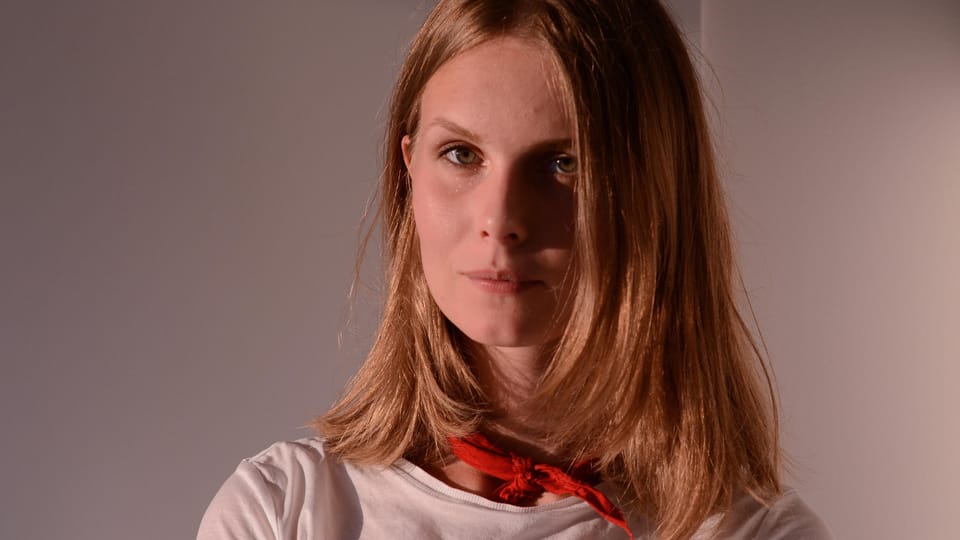
Nikola Liptáková Vallmostrand is the head of the Czech Centre Stockholm, which promotes Czech culture and develops ties between Czechia and Sweden and across the Nordic region. We met in Stockholm during our visit to Sweden to record the third series of Science Without Borders, produced in cooperation with the Czech Centres and Czexpats in Science. With the new series launching later this week, this is also an opportunity to look at the work of the Czech Centre Stockholm and its role in fostering Czech-Swedish relations. I began our conversation by asking Nikola Vallmostrand about the scope of the Centre's work.

“Although we are called the Czech Centre Stockholm, we cover the whole Nordic region. That includes Norway, Finland, Denmark and, of course, Iceland. But we are based here in Stockholm.
“How many people are behind it? That's quite a hard question to answer. There are three of us working permanently at the Czech Centre Stockholm: myself and two colleagues who are project managers.
“We also have great cooperation with both Czech and Swedish universities, from where we have interns, usually in the final year of their studies. So that's the main team here in Stockholm.
“But then, of course, there is the whole team in Prague and all the support we get from there, as well as our cooperation with the embassies in Norway, Finland and Denmark. You could say that those people are also behind the Czech Centre in Stockholm and all our projects.”
So that's really quite a large region that you cover.
“Yes, it is. Even Sweden alone is a very large country. The train journey to, for example, Umeå, where we're going to be represented at an international film festival, takes the whole night. It's a ten-hour journey. And then, of course, there are the other countries as well.”
I know that you had already been living in Sweden for some time before you became head of the Czech Centre. What brought you to this country in the first place?
“I decided I wanted to write my bachelor's thesis abroad, and I was choosing between Finland and Sweden. Since I wanted to study in Sweden, I decided to spend my final year of bachelor's studies here.
“I was hoping to get into university, but then I learned that the programme I wanted to study was only available in Swedish. So it took me some time to learn Swedish well enough to be able to do a master's degree. It was another three years before I managed to get into university. It was a joke – the programme opened in English the moment I passed my Swedish exam!

“I had already spent a long time here during some of my formative years. Those are really important years in a young person's life, so I decided to stay. I had a large circle of friends and knew how the country worked.
“After my master's degree, which lasted just two years, I came back and stayed here. I found a partner, you know, the usual story.”
(What was the programme that you studied, or wanted to study?
“It's called Technical Art History and Art Museum Studies. It's basically about the technical analysis of art, but there was also a strong focus on archival studies, provenance research and something called social art history.
“The latter focuses more on how art and culture can be used for political purposes, or how they can influence the masses, and so on. So that was the programme.”)
You've been head of the Czech Centre for almost a year now. What does the job actually involve?
“The job involves everything that any other director's position involves: taking care of employees, making sure we have a viable strategy and ensuring that the budget holds together.
“It also involves a tremendous amount of cooperation. I would perhaps call it diplomatic skills, because we work closely with other institutions and embassies, and sometimes we don't see eye to eye on operational matters.
“So it involves a lot of meetings and brainstorming, but also talking to young people who come here as interns and making sure they have opportunities to develop and meet potential future employers.
“It's quite a broad job. It requires a lot of creativity, but also strategic and operational thinking.”
You've already mentioned the team. What about the budget? What kind of resources do you have? How much does the budget affect what you can do?
“Many [Swedish] people have studied in the Czech Republic, either through Erasmus or at university. Studying medicine in the Czech Republic is quite common, as is studying at technical universities.”
“I always joke that I'm a master at creating big projects on a shoestring, because I've previously worked in other cultural institutions where the budget was almost non-existent.
“Our budget covers the main costs, such as offices and employees. These are obligatory expenses, so we don't have to worry about them or look for money elsewhere.
“Then, of course, we also get some funding for our programme, and that varies considerably from year to year. Like everyone else, we'd always like to have more. That's a song everyone sings!
“But when it comes to funding our programme, we have to focus a lot on cooperation with different cultural institutions, companies from the creative industries and other sectors to be able to deliver larger projects.
“In Prague, however, there are many projects we can simply ask to use. A lot of exhibitions are prepared there and can be transferred very easily. So you could say that we don't have to spend as much of our budget on hiring Czech curators and preparing these kinds of programmes. They're already very good at that in Prague.”
You've already mentioned some of the things you organise. There are all sorts of events, from exhibitions and films to literature and Czech language courses. What tends to attract Swedish audiences the most?
“I think it depends on the Swedish audience, because there are many people who tend to concentrate in specific interest groups. You have people who are quite nerdy about particular subjects.
“So when it comes to photography, for example, there's a huge group of people interested in photography, and when we bring a Czech photographer, they're excited about it.
“Then there is theatre, which attracts a broader audience, especially when, for example, the Swedish Opera stages Rusalka, as has happened several times.
“Lately, we've also noticed quite a bit of interest in translations of Czech authors and theatre adaptations. But I would say that what currently attracts Swedish audiences the most is the Czech film industry.
“There's a huge buzz around it, and whenever there are Czech films at international festivals, we're getting recognition. We're even talking with some festivals about making the Czech Republic their guest of honour. So for now, I would say it's the film industry."
Do you mostly attract people who already know something about the Czech Republic, or also people who are simply curious about the country and its culture?
“It's actually both. Many people have studied in the Czech Republic, either through Erasmus or at university. Studying medicine in the Czech Republic is quite common, as is studying at technical universities.
“I think a lot of Swedish people see us as a country where you can have good parties, but they also see us as a beautiful historical country.”
“Those people usually love the country, so they're very happy to come to our events and bring their friends. You could say they're unofficial ambassadors for the country.
“But we also attract people who are simply curious and perhaps know the Czech Republic mainly as a country of castles and history. Then suddenly we have a contemporary musician or a DJ here, and they can experience some of the contemporary heritage and culture we have to offer.
“And then they decide to visit the Czech Republic and have a slightly different kind of holiday instead of just going from one castle to another.”
This is exactly what I wanted to ask you about: the image that you think Swedes have of Czechia. What do they usually associate it with? And are you trying to change or shift that view and offer them something new?
“I think, as I said, a lot of Swedish people see us as a country where you can have good parties. I have to say that. But they also see us as a beautiful historical country.
“What they don't tend to think of us as is an extremely creative nation with amazing science and research. That's something recognised by people who are interested in those fields, but the general public often doesn't associate the Czech Republic with that.
“Yet our contemporary science is amazing, and we have so much to offer. Very often, something happening in Sweden or the Nordic countries actually comes from Czechia. It might be research, an idea, a concept or a methodology, but people don't know it's Czech. They just know the name of the person or the methodology.
“I think that's something we're trying to work on more: showing that these creative industries are Czech and that they're something typical of our country.
“I honestly think we're one of the most creative nations in Europe, considering how small we are and what comes out of the Czech Republic. But people don't necessarily know that it's Czech.
“I see that creativity as part of our culture, and I would really love the Nordic region to recognise that it's actually part of the Czech soul.”
And talking about the people you attract, I imagine that you also function as a sort of connecting point for all the Czech expats living here.
“Yes, we definitely do. There is, of course, an association of Czechs and Slovaks and Swedish friends, but they work solely with people who have moved here.
“I honestly think we're one of the most creative nations in Europe, considering how small we are and what comes out of the Czech Republic. [...] I would really love the Nordic region to recognise that it's actually part of the Czech soul.”
“We are also a connecting point, and there are many young professionals who come here and live, in a way, between the two countries.
“So we definitely do that. I would also say that we try to focus a little on Swedish people in the Czech Republic and get them thinking about us while they're still there, so that when they come back, they remember us and become part of the network.”
What are some of the projects you're working on right now, or projects that will happen in the near future that you're excited about?
“So right now we're in the planning period, and we're working on a new strategic plan. It's not that different from the way I've been thinking about the work of the Czech Centre.
“I want to work a lot with the creative industries. I'm also very interested in working intersectionally and interdisciplinarily, connecting art, science, business and public debate. I think that's the only way – that's what culture is, really: a connection between all these different aspects.
“At the moment, we're working with a Czech designer who has created an exhibition combining fashion and fashion photography. It brings together Czech and Swedish national costumes with a modern twist.
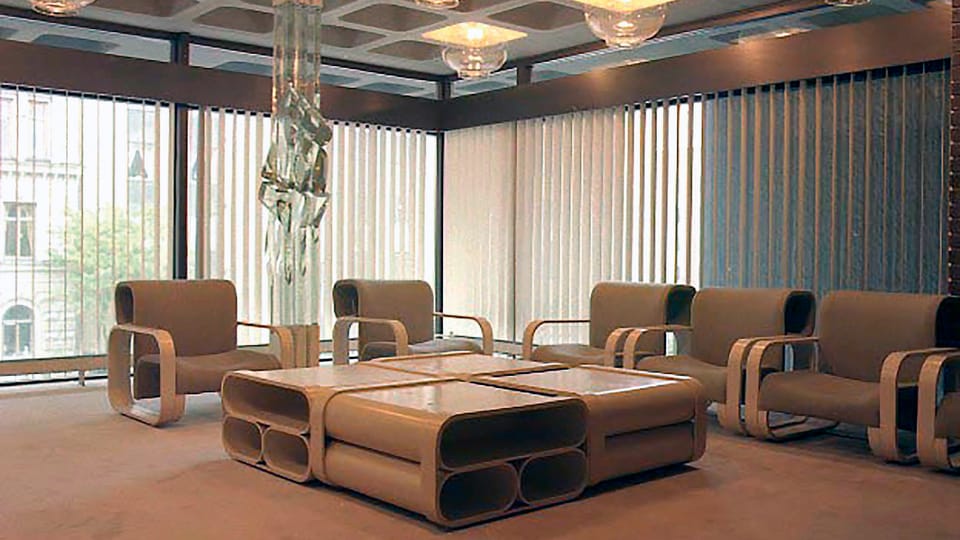
“We'd also like to bring more Czech designers working with sustainability, beautiful design and Czech craftsmanship, and create a larger project around Czech fashion design.
“Then we're focusing on architecture next year, as well as urban planning and art in public spaces. That's a whole-year project in which we'll cooperate with different municipalities in Sweden and so on.
“We're also working with Pigmentarium, the perfume brand, which is going to launch a perfume here and start a new cooperation with the haute couture or niche perfume sector in Sweden. So they're kind of entering the market here.
“The gaming industry is another area. And finally, I'd say we're trying to give science and research a little more prominence. So launching a podcast about Czech scientists here in Sweden and also become more involved in Nobel Week in the coming years. That's something included in our strategic plan.”
Related
-

Science without Borders: Interviews with young scientists who are helping to change the world
They are young, ambitious and above all curious. They left their home country to study science abroad. The spotlight is on Czech scientists working in Austria.
-