From Melitopol to Prague: Mykola’s Journey Through War, Displacement, and Hope

For Mykola, now a student in Prague and an employee at UNICEF (the United Nations agency for children), “home” has become both a memory and a vision of the future. His story reflects not only the personal struggles of a young man forced to rebuild his life in another country but also the collective resilience of Ukrainians scattered across Europe.
Reflecting on the sentiment of home, Mykola takes time to respond. He looks up and says, “I haven’t returned home in four years. My home city has been taken over. I remember it fondly. I call it Melitopol, Ukraine. I lived there for 17 years and I call it home. A beautiful city I absolutely cherish.”
Childhood and City of Memories
The Ukrainian city of Melitopol, famous for its cherry orchards and lively markets, was recently described as one of the most beautiful in the country. “Before the Russian invasion, Melitopol was a city under renewal. Modern infrastructure was popping up everywhere. New stadiums, swimming pools, elegant cafes. The beautiful city of Melitopol had everything one needed to live comfortably.”
The Day the War Began
On February 24, 2022, when Russia began its full-scale invasion of Ukraine, Mykola was studying IT in Kharkiv. The memory of explosions and shock is still fresh in his mind. “Hearing the explosions in the morning made me lose a bit of my sanity. I couldn't believe in the 21st century, that this is the way a war would break out. I thought the whole thing was some kind of a joke.”

Disbelief was replaced by a new and stronger feeling – fear. Kharkiv's train station was busy and full of people, Mykola recalls, and he was one of the many people on the station that was waiting for an evacuation train. “I was one of many who felt panic, it felt like the whole world was running towards the metro to escape. I was completely lost and was certain they are going to bomb the station.” That night was a shock for him as he shifted from sleeping on a bed at home to sleeping underground in the metro.
Hardest of all was the uncertainty. “I didn’t know how I would study, how I would live. Most of my friends had already left. I felt lost,” he admits. Even amid the bedlam, however, there were flashes of unity. In Zaporizhzhia, he worked alongside his aunt and sister in a school, deftly breaking the shells of walnuts that were later sent to the front lines. “People brought food, clothes, anything they had. I’ve never seen a country pull together like that before.”
Leaving Ukraine
Eventually, Mykola made the decision to go. Following friends who had promised work in Plzeň, he made his way to Czechia, where he touched down with just a hundred dollars. It was his first encounter with the Czech Republic and he did not feel at home, especially after being subjected to harsh factory work through an agency that took advantage of newly arrived refugees. “I was working twelve-hour shifts. I woke up at five, came home at seven, ate, slept and started again. It wasn’t a life.”
But he remained undeterred. “I didn’t want to live off my relatives. I wanted to earn and support my family.” Mykola says that he then moved to Prague where he made friends, gained stability, and ultimately, found his present job at UNICEF.
The Challenges of Starting Over
The first months in Prague felt lonesome. “In Ukraine, I had a ton of friends. Here, it’s like I had to start from scratch - new language, new people. No one really feels at home when they come in as a refugee,” Mykola states. The things that helped are community: socializing with other young Ukrainians and friendly Czech people.
He has not personally encountered strong discrimination of any kind but is wary of the current political environment. “At the beginning, Czechs treated Ukrainians like they were one of them. But now some parties are openly anti-immigration. I feel it could get tougher.”

Growing Up Overnight
War is the reason why he had to mature in an instant. “As soon as I got here, I understood I was on my own. I grew up the day I realized that I had to set up a serious plan of work and study to achieve something, and that someone was not going to do it for me.”
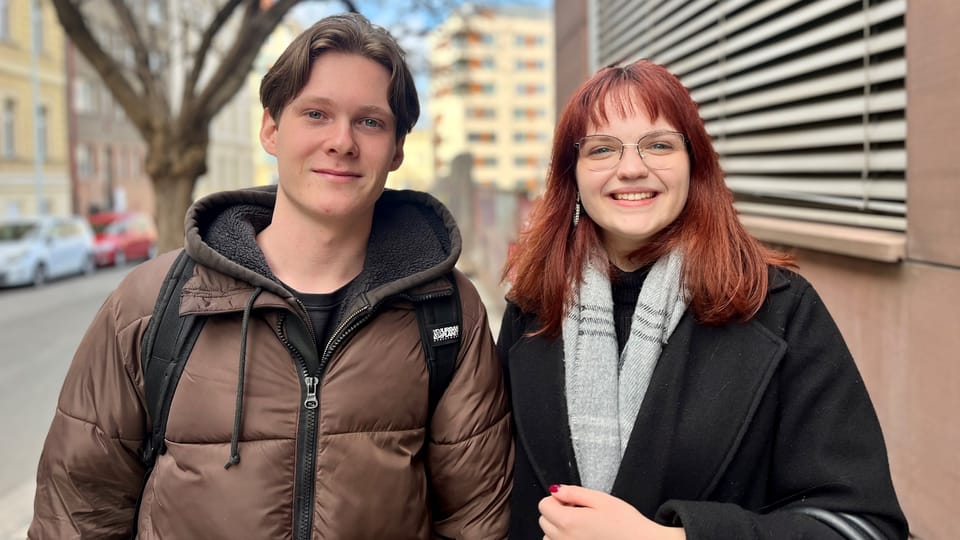
The plan is simple: earn a diploma and work for the rest of the time in humanitarian aid. “I have already gained three years of experience, and I want to continue assisting refugees and the youth. I want to be in the next 5 to 10 years in this field, assisting people to get their lives back.”
Nevertheless, his most cherished wish concerns his own life. “I want to buy my mother an apartment. She lives with my brother in Poland, and my wish is to provide them with a better standard of living, to pay for my brother’s education, and to ensure their safety.”
A Conditional Return
Would he like to go back to Melitopol if he could? For Mykola the response is, “I would never do that if the city is still being occupied.”
“I am not interested in soldiers, propaganda, or faces devoid of joy. However, in regard to my family, I would go to this place as soon as it is in my possession – a desire to walk, to experience the city I adore, to enjoy it.”
For the time being, he is in Prague, while Ukraine serves as his guiding star. As to the question about what would he say to the other young people who were also subjected to forced migration, his response is short. “Concentrate on your schooling. Do not drink or take drugs. Instead, defend your nation. Do something to create a bright tomorrow.”