Maya Kvetny’s casting journey from LA to Prague
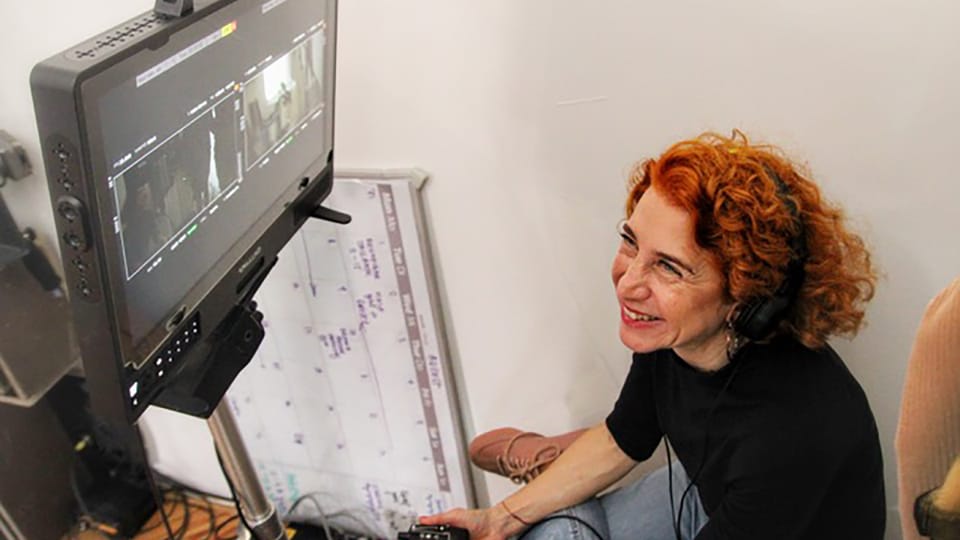
Maya Kvetny is a successful casting director based in Prague and the founder of the agency Myrnyx Tyrnyx. She has become a key figure in international productions filmed in the Czech Republic, with credits including Jojo Rabbit, Spiderman: Far From Home, Nosferatu and Blade Runner 2099. I caught up with her in her studio to talk about her career and the craft of casting.
Could you talk to us about how you got started in the film industry?

“A lot of times people become casting directors because they're interested in being in the industry, working in the industry, and they start by being an assistant to a casting director or working in production and then being drawn to the process of casting. My journey was different. I started out with a vintage clothing store. That was the first thing that I opened in the Czech Republic. I began to create these sort of performance art happenings so that people could understand how they could wear a combination of vintage clothing and upcycled clothing. I engaged artists, dancers, actors and circus performers to be my models at the time. And that was in the mid-90s. And then out of that came a desire to help these people get into the media. So I began to create an agency to help usher them into commercials and films. And little by little, I realized that what I really wanted to do was casting. So I no longer ran the store. I closed the store up. And the rest is history. I became a casting director from the ground up. And I love it. And the projects have been getting more and more challenging and larger. It's a wonderful job.”
And so who are the people you predominantly work with?
“It's always been a mix. It's locals from Prague or Czech Republic, as well as travelers and expats who are planted here.”
What do you think are the three biggest attributes that would make someone a successful casting director?

“A sense of what somebody's potential might be, because you almost never can see them doing all the scenes that they're going to be doing in the project. Because you usually only cast with a snippet. You might cast using one scene and they will have multiple scenes. So you have to have an intuition about their potential. It's like a gut feeling. A good casting director casts outside of the box and is trying to find interesting options, not the obvious choices. And of course, as well as the obvious choices, so that the director and producers have choices. Then I would say an ability to coach the actor during the process of casting to become the best actor that they can be in that moment for that role. Also, follow-through, thoroughness. Yeah, there's that business side as well. A good casting director doesn't just show options, but they also have the ability to put the whole thing together.”
Do you observe a difference in the way casting agencies are run here in the Czech Republic versus how they may be run in the States?
“I think that everything in the Czech Republic is following its own beat, it's got its own kind of unique magic, and that applies to the process of casting, as well. I work in tandem with UK casting directors and American casting directors on most projects. It's often two or three of us spread out working on different chunks of casting. And so I would say that it's been streamlined and the actual processes that are in place are pretty similar. But maybe how we find the talent could be a little different over here.”
And so as I understand it, you're pretty independent and you can do many things on your own terms.
“I'm usually not in the main production office. I have my own studio on the hill. It's like a tree house and it helps me because this is a bit of a stressful job with a lot of time constraints and you have to turn talents over very quickly. Being able to look out the window and see trees all around helps me to keep centered.”
For our listeners, it's important to know that your studio feels very homey. I think oftentimes when people picture a casting studio, the images can come up as feeling stark or intimidating. I'm sure your studio really helps the actors relax.
“The actors love to come to the actual studio. During COVID, the process of self-taping became a standard. That means that the actors are taping themselves in their own homes or with other actors because, of course, that was what happened during COVID. That allowed us as casting directors to realize that we could cast the net much wider because when the actors don't have to come into the studio, you can see actors that normally weren't coming into the studio. So it gives us a much richer palette of talent. And I know that actors now, although they do send self-tapes, are very excited when they get to come into the studio to do an in-studio casting.”
Do you observe a difference between actors who are trained in the States versus actors who are trained in Europe?

“Certainly each country has different methods of training actors. An actor that's trained in the Balkans is going to be using very different methods than somebody that's trained in the Czech Republic or out of France. And I also think that the governmental assistance that's offered in Germany and in France has really helped to raise the level of actors and the level of education that they have. Because, for example, in France, there's actually a stipend available to working actors to become better at their craft after they have been educated throughout their lives. And there's a similar stipend available in Germany. We don't have anything like that in the Czech Republic. The actors maybe don't have that type of education available to them with master classes and different types of coaching. However, we have a lot of great funding for films over here. So people that are making films have an actual chance to collect some funding. And so that's also helpful for actors.”
Does your job ever merge into your everyday life in the sense where you'll be walking on the streets or riding the metro and you'll start to typecast people in your mind or think, wow, this person would really fit a particular role?
“For sure, when I first began, I was doing a lot of street casting. At that time, we didn't have such an advanced database available to us of talents and diversity. And so I was kind of creating it by collecting people on the streets or in restaurants. Whenever I would end up talking to somebody and think this person might be able to do it, I would invite them to come visit me and give them some text and work with them. But as time has passed, I would say that now there's a wonderful database available, out of Europe called Filmmakers, there is also a database in the Czech Republic called Actors Map. And so now we can search for those actors and it's much quicker. But that doesn't stop me still when I go out into my daily life. I find people and add them to projects. I would say it's happening consistently, maybe once every two months or something.”
In your opinion, what makes a good actor?
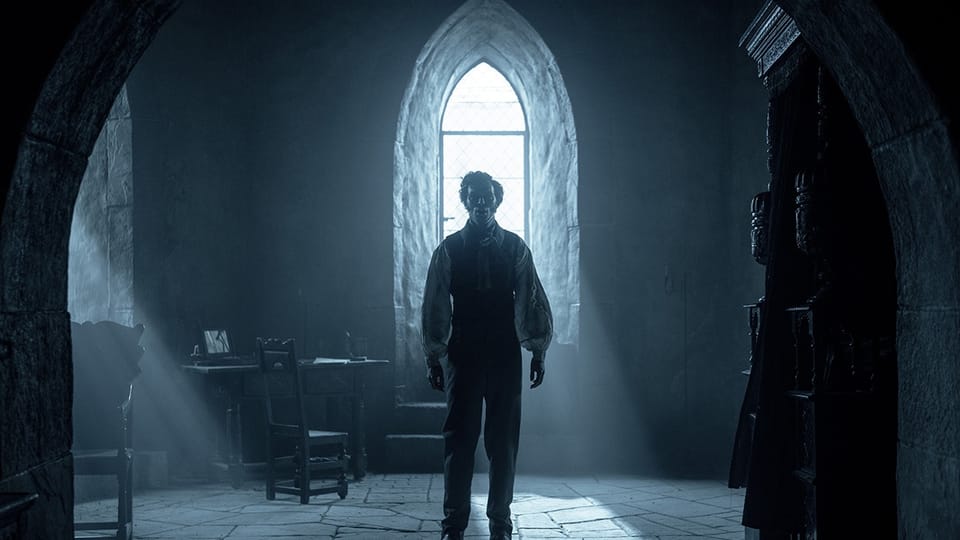
“What makes a wonderful actor is if they can find a way to help the viewer have a key to unlock wells of compassion for other people that are in different situations than them. And I think that's what keeps me in the film industry is that through film and TV, we are able to tell these stories and share our experiences of lives that are very different. And by giving the viewer a chance to submerge themselves in a life they would never view or experience, they might have a deeper sense of understanding and empathy for those people that are not living the same lives as them, including the bad guys.”
What is then the hardest part of the job?
“Telling actors they didn't get the job.”
Yeah, I bet. What is the best part of your job?
“Telling actors they got the job. And also knowing that I cast that and that because of this choice and this process, I am taking a part in this beautiful story that's going to be told.”
Maya, what's your magic to make the actors feel comfortable in the room?
“I try to be as vulnerable as possible while still retaining the power that I have to have to direct them. But I try to make sure that they understand that we're all just people doing the best we can.”
If you could go back and cast any movie, what movie would you have liked or wanted to cast?
“That's a beautiful question. The Godfather. But not because it's not well cast, but because in the process of my work, I have discovered so many, many amazing actors that would hold their own there that I would have loved to have given them a chance to be in The Godfather.”
Did you grow up a big movie fan yourself?

“I grew up in Los Angeles and I wanted to be an actress and I was completely enamored with every aspect of filmmaking. And so I watched as many films as I could and was curious about the lives of the actors. I took classes and I had coaching. And then when I was I think around 19 years old, I got street cast as a supporting lead in a feature film with a very respected director and producer. It was like my dream was coming true. And then, fluke occurred and the film got taken by a different producer and made in a completely different way and I was no longer relevant to the casting because there was a completely different vision. And it was so heartbreaking for me to go up so fast and then down so fast and nothing to come out of it that I said I cannot be involved in the film industry at all. I fled the film industry. And now you see you cannot escape your destiny.”
Do you recommend Prague to other people?
“Yeah, if Prague is for you and you stick it out because it's not always easy and the language is difficult to learn. If Prague becomes your home, there is a lot of magic around you. And every day, something changes. Everything serendipitous occurs. And if you face your intention, you have a very strong chance of getting somewhere towards your goal.”
What do you think the future looks like for the film industry here in the Czech Republic?
“The future in the Czech Republic for the film industry is bright. Recently the rebates are being offered by the Czech government to films that are coming from abroad - they just made a decision to raise these rebates. So in the upcoming years, I imagine that a lot of the film industry will move back here. It has been sort of moving east. And I think that we will get back a good chunk of it.”
That's awesome. Do you have a favorite Czech movie? Because I'm correct to say that you're fluent in Czech.

“I would say that one of the reasons that I decided to come to Prague was because I was a big fan of Jan Švankmajer. He did a beautiful film about Alice in Wonderland, which is stop action and I think live action as well. And it's really terrific. And he's a kind of surrealist, but a brilliant artist. So that's one of my favorite movies. And also I really love Sedmikrasky, which is Daisies. So those would be my favorite Czech movies.”
What is some advice you would give to nervous actors going into an audition?
“To ground themselves and to remember that they are wonderful exactly as they are and that they should just be as present as possible. And definitely prior to doing the read, if possible, ask the casting director any questions they may have.”
My final question is, what is your motto in life and something that keeps you going?
“Do everything you possibly can now. So I would say do it now. Don't put anything off that you could possibly do now. I would say that that's also allowed me to do an enormous amount of creative projects in a short amount of time.”
It's so impressive because you're an absolutely self-made casting director.
“Yeah, I guess so. But with a lot of help. Yeah, and the family that I have in Prague. Family is also the people that you surround yourself with. So I surround myself with people that I admire and that are working towards similar goals.”






