Ladislav Špaček recalls 10 years at Václav Havel’s side

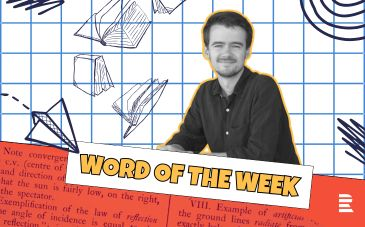
Ladislav Špaček is a Czech writer, television journalist and presenter, whom Vaclav Havel handpicked to serve as his spokesperson between 1992 and 2003. In the course of that decade, which Špaček describes as the most exciting and rewarding period in his professional life, the two men were in daily contact and travelled the world over.
In an interview for Czech Radio, Špaček, recalled how Vaclav Havel first entered his line of vision.

“I naturally knew about Václav Havel’s existence from those terrible newspaper articles in the communist paper Rudé právo. Václav Havel was portrayed there as a symbol of imperialism and of the wealthy Czech bourgeois society. But in reality, I only began to perceive Václav Havel shortly before the Velvet Revolution and immediately afterwards. Because that was when Václav Havel became a symbol of the Velvet Revolution. Of course, he was not the only person who brought down communism in Central and Eastern Europe, as the Americans thought. But he was the person with the greatest authority among all those who were representatives of the dissident movement. They would argue all night and could not agree on anything. Václav Havel would sit and listen to them and then, after three hours, say, “Well, I think we should do it this way.” And that was how it turned out, because he radiated an authority that affected everyone - even though he was a man of small stature and quiet-spoken.”

Ladislav Špaček joined the presidential team at a particularly difficult time for Václav Havel. Despite his efforts to prevent it, Czechoslovakia was coming apart. His reception in the Slovak capital Bratislava was cold and separatist tendencies in Slovakia –and among Slovak MPs in the federal parliament –thwarted attempts to organize a referendum on the pending divorce. Havel stepped down as president of Czechoslovakia and would shortly be re-elected a president of the newly-established Czech Republic.
Journalists and politicians lived in a kind of mutual symbiosis
Ladislav Špaček recalls the day that Václav Havel walked into his office and offered him a job.

“A year after the revolution, in the autumn of 1990, I joined Czechoslovak Television. At that time there was still just one Czechoslovak Television, before the common state was divided. I quickly became head of the domestic news department. And then, one evening in the autumn of 1992, I was sitting in my office when the door opened and Václav Havel walked in. Today that sounds absurd, but at the time it did not surprise me at all, because journalists and politicians actually lived in a kind of mutual symbiosis. It wasn't that they were constantly stepping on each other's toes as they do today, with politicians saying that journalists are enemies of humanity and that journalists look for every slip-up and every little mistake so they can use it against a politician. Back then, we were all building a new democracy. We essentially had a common goal, so our relations were very friendly.
“ Václav Havel sat down and talked for a while, and then it suddenly became clear why he had come. He offered me the opportunity to become his aide, to become his spokesman and to spend the next term in office — nobody knew then how many there would be — at his side. That shook me a little, but I didn't think about it for more than a few seconds, because I realised that spending part of my life close to him, or at his side, would be a truly unique opportunity. So I said yes.”

In the course of the next decade, Špaček worked closely with the president on a daily basis. He was on call 24/7, dogging the president’s footsteps wherever he went. He recalls the first time he visited him at his Prague apartment.
“When I first entered his home right on the Vltava embankment, I was stunned, because Václav was sitting at his desk and had a spectacular view of Prague Castle from the window. And it occurred to me that he had spent his whole life looking at Prague Castle. There is incredible symbolism in the way fate arranged things: although he spent many years in prison, although he was a person cursed by the regime, every day he looked at Prague Castle — and in the end, he got there . It was truly remarkable.”
Prince Charles came to Prague incognito
The return of democracy after four decades of communist rule had galvanized foreign relations and officials from around the world streamed to Czechoslovakia and later to the Czech Republic to meet the country’s respected new president. All these visits garnered considerable attention both here and abroad –but some were private. Špaček recalls one such visit by Britain’s King Charles – at the time still the Prince of Wales –who was immensely interested in architecture and the environment.

“When I look at Jirásek Bridge, I recall the moment when Prince Charles, the British heir to the throne, was waiting on the bridge for Václav Havel. He had come to Prague and was here pretty much incognito. He had heard Václav Havel speak in Britain about the wonderful southern gardens of Prague Castle. At the time, the gardens overlooking Malá Strana — the Kolowrat, Ledebour and Pálffy gardens — were in terrible condition. Prince Charles decided to establish a fund to finance their restoration so that they could flourish again and become places where Prague residents could go for walks. So he came to Prague and waited for us here on this bridge. We saw him from the window, so we grabbed our coats, ran downstairs and walked through Prague with Prince Charles and his bodyguard. Those memories are absolutely unforgettable for me.”
Václav Havel got invitations from leaders the world over and particularly during his first years in office travelled extensively. He spoke at important international gatherings and his views garnered respect and attention. His speeches made front pages at home and abroad. But Spacek says that he was actually a shy man at heart, who did not truly enjoy being in the limelight.

“Václav Havel was actually very shy, extremely nervous and did not like the media. He was very apprehensive about them. He particularly disliked television because he knew that on television people would focus on his appearance - how many new wrinkles he had and what he looked like, whether he was sweating or not - and that this distracted attention from what he was saying. If anything, he preferred radio, because they could edit all his pauses, his umhs and ahs in the flow of his speech. Then, when he listened to it, he was delighted by how good and coherent it sounded.

“So I had to represent Václav Havel in practically 95 percent of all communication with the media. It was my daily job to speak for the president, not only here at home but essentially throughout the world, because Václav Havel was a figure who interested the whole world, and international news agencies regularly reported on what Václav Havel had said. And his speeches were well worth noting. His Harvard speech on globalisation remains pertinent to this day and I think it is worth returning to at any time.”
It is truly fascinating how intently people today follow all the catastrophic forecasts, and how little they take them into account in their actions. Surely by now every schoolchild knows that the planet's resources are limited and that if we consume them faster than they are able to regenerate, things cannot end well for us. Constant growth in production and therefore consumption is seen as the main sign of a state's success, not only in poor countries, where such an attitude might be understandable, but also in wealthy ones, which are cutting the branch they are sitting on through their ideology of mindless, endless growth devoid of any rational purpose.
Václav Havel
Ladislav Špaček’s time with the president took him on countless foreign trips. He recalls that those trips gave him even deeper insight into the kind of man that Vaclav Havel was –genuinely kind and compassionate, a man who was not in the slightest way changed by the high office that he held and the attention that he got around the world.

“Václav Havel influenced me in many ways. He opened up a new view of the world for me. He was someone who cared about how people lived on the other side of the planet, someone who felt compassion for people suffering somewhere far away. People felt that and loved and respected him for it.
“One particularly moving scene took place when we were on a state visit to Brazil and the Brazilian side wanted us to visit a village called Lidice. It was a small village in the mountains that had adopted the name after the Lidice massacre by the Nazis.
“So we set off for the village. We went up into the mountains by bus so as to avoid a convoy of limousines. As we approached the village in the mountains, we saw crowds of people streaming around the bus and heading somewhere. We kept looking around, wondering what was going on. When we reached the village we could not get through the crowd of people that filled the entire space. We got off the bus and Václav Havel stepped onto the platform. And then those ten thousand people began chanting, “Havel, Havel.” It was a feeling I had never experienced before. And I have not experienced it since. We realised that we were working for a man who, on the other side of the globe, was regarded as a symbol of freedom and democracy and people appreciated him.”

When Václav Havel took office, he himself shaped the presidency to a large extent. The country was moving on the road of democracy and a market economy –but even smaller things needed changing –like the running of the Office of the President and the interior of Prague Castle. He turned to trusted artists and architects and followed his own intuition. In many ways he had a problem accepting the constrictions of diplomatic protocol –both at home and abroad. Ladislav Špacek says this was widely accepted and respected.

“Václav Havel was someone who, with all the world's statesmen, talked above all about human rights and human suffering. When we arrived in Australia, we did not go to see the governor-general and the country’s top officials first. Instead, we travelled north to Darwin to meet Aboriginal people, the neglected indigenous inhabitants who live in the rainforest much as they did two, three or four centuries ago. Václav Havel met them first and only then went to see the government officials. And that was always the way he did things.”
When Vaclav Havel died, thousands of Czechs streamed to the statue of St. Wenceslas on Wenceslas Square to pay tribute to his memory. Even fifteen years after his death public surveys indicate that he remains the most respected president in the country’s modern history – a man of strong moral authority and vision who put Czechoslovakia and later the Czech Republic on the world map after 40 years of communist rule.

“When Václav Havel died, all the world's newspapers published obituaries. That was evidence of the respect in which Václav Havel was held around the planet. He taught us to see the world on a global scale. He was a close friend of the Dalai Lama, a friend of Suu Kyi in Burma and also of Mother Teresa whom we visited in her home in Calcutta. All of that showed that Václav Havel sympathised with those suffering around the world.”
In 2012 Ladislav Špaček published a book titled Ten Years with Václav Havel - a memoir and insider look into the presidency of the first Czech president. In it Špaček shares back-stage details of Havel's meetings with world leaders, US presidents, the Pope, the Dalai Lama, and even rock stars like the Rolling Stones. But it also portrays Havel as a human being - a person with his own quirks, doubts, and a great sense of humor.

Related
-

Václav Havel remembered
Czech democracy leader Václav Havel was born 90 years ago this October. We speak to several people who were close to the dissident playwright-turned-president.