“I see a meaning in my life”: Kumar Vishwanathan on three decades of supporting Roma in Czechia

Among the recipients of state awards on Wednesday’s Czechoslovak Independence Day was Kumar Vishwanathan, an Indian-born social worker who has devoted decades of his life to helping Czechia’s Roma community. Vishwanathan quit a teaching job to work with Roma who lost their homes in flooding in Ostrava in 1997 and eventually helped set up the city’s Coexistence Village, which he still heads.
The Office of the President said you had received the Medal of Merit for “long-advocating for a dignified life for the Roma and their co-existence with the majority society.” Do you feel there have been many changes in the position of Roma since the 1990s?
“I think fundamentally no. Because structural problems still remain. By structural, I mean problems in education, the schooling system, the psychological-pedagogical consulting system.
“Housing is also a very big problem, and I think these two have not changed.
“So far as police and the Roma, it has changed a lot, for the better.
“Security-wise, it’s much better. I remember the 1990s. There were skinheads roaming around and they were all very afraid.
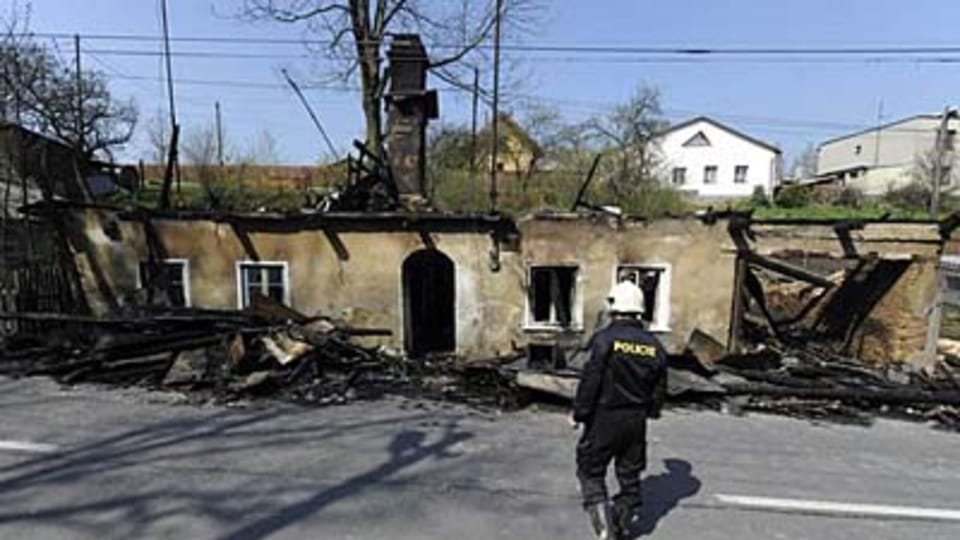
“Then came the attack in Vítkov, a town near Ostrava, where on Adolf Hitler’s birthday four neo-Nazis in 2009 attacked a sleeping Roma family’s home at midnight with petrol bombs.
“The family’s daughter, little Natálka, was one and a half years old and she had burns on 80 percent of her body – and she survived, thankfully.
“Thankfully, those kind of extreme racist violent attacks have subsided.
“A positive thing is that a lot of Roma are working now – I say that as an amazing thing – especially in construction.
“There are a lot of Roma university and secondary school students. That is a massive movement, which has to be recognised.
“I remember in 2000, at least in Ostrava, there were hardly any well-educated Roma.

“Because the schooling system was such that most of the children were sent to special schools for the mentally retarded; then you cannot get into secondary school.
“Now that has changed. I think that is fundamental.
“So these things I see as positive. I feel positive and optimistic about the trend of the Roma.”
People who know you and your work have seen what you have done for the Roma community in Ostrava and beyond. What has the experience of working with the community given you over the decades?
“I think a lot of happiness.
“I remember the day when I decided that I would stay with the Roma until they got houses.
“That was in 1997, in these cabins, and I moved into them myself with the Roma.
“And the first evening was so magical. There was a family with two children and they had nothing, they just had what they had on them, in a barren little room in an asbestos-covered shelter.
“There was a police van outside and people had been signing petitions [against them]. And they had just lost everything they had and their home.

“The lady, Natálie, took a newspaper and rolled it up and started singing, and her partner – who was making some food for the children – took a spoon and started drumming.
“And it was so magical. I felt that they are an amazing people.
“Something changed in me that day; I got something from these people that I missed in my life.
“I see a meaning in my life – I can be of some use to these people.”
All your work was recognised this week at Prague Castle, when the president gave you a Medal of Merit. What did it mean for you to accept that award from President Pavel?
“Firstly, it meant an appreciation of the 29 years of work, of this organisation, of the people in this organisation. There’s an amazing team, a Czech-Roma team.
“I’m just a catalyst, maybe, but it’s their work – it’s their recognition.
“It was also a happy occasion, of course. I cannot deny that I was really touched by this honour, and to receive it in the ancient Vladislav Hall.
“And being with my friends and all the other people who received awards, especially Elena Gorolová [who campaigned for Roma women to receive compensation for forced sterilization].
“That was amazing, because I know what it means for the Roma community – the fact that a Roma woman has got the second-highest order of the land [Order of TG Masaryk].
“I think that is really a watershed, a really important moment in the life of the Roma in this country. I think we will be speaking about it for a long, long time.
“Tomorrow I’m meeting children at the Don Bosco Centre in Liščina and I will try to show them the significance of the fact that Elena Gorolová, a Roma lady, has won the second-highest order in the land.
“And I will try to inspire them to be strong, be consistent, not give up and be inspired.
“So that is what it means to me.”