Historic trains get new lease on life: Railway Administration allows operation without ETCS
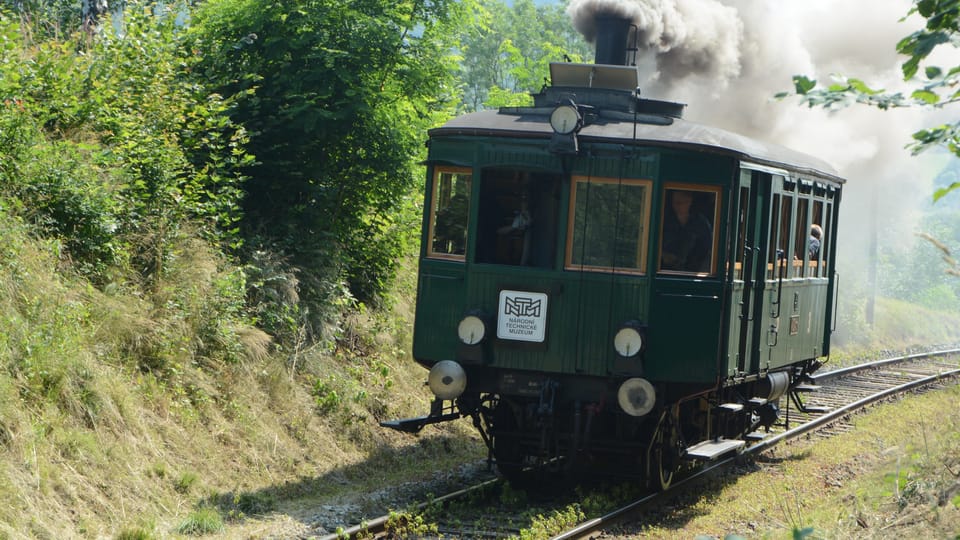
Historic trains will probably not receive a red light after all with the arrival of the new European Train Control System (ETCS) signaling system. The system was designed to improve safety and efficiency across European rail networks, but some historic trains were blocked from operating with them. Under new conditions, these trains could now return to the main railway corridors.

"We are on ‘Locomotive Seven,’ made in 1917. In 1997, we put it into operation. Since then we have been maintaining it," says Jaroslav Křenek, who is now preparing the locomotive for the season.
The Rail Transport History Club and other railway associations bid farewell on the main corridors in Česká Třebová and Olomouc on the last weekend of December.
Since January, the mandatory operation under ETCS on the main lines between Břeclav, Ostrava, and Prague has been in effect, and in the coming years, the state plans to extend it to an additional 4,000 kilometers of track. The Railway Administration has long stated that there would be no exceptions.
However, at the insistence of operators of historic trains and, for example, the Pardubice Region, it has reversed its stance and is now allowing exceptions. Dušan Gavenda, spokesman for the Railway Administration, describes the needed conditions:

"It must be a historic vehicle approved by the Railway Administration; it will only be allowed to run with passengers during the nostalgia event itself, not to move to or from the event; the request must be made at least 30 days in advance."
However, it is necessary to secure the route of an emergency train that does not have ETCS against a possible collision with another train. Gavenda continued:
"In simple terms, this means that this emergency train will only be able to leave one station once the train path to the next station has been secured. There will therefore be no other train in front of it. Of course, it will only be possible to construct a route for such a train if the capacities at a given location allow for it."

And that’s exactly the catch, the corridors are overcrowded and the Railway Administration can hardly find any spare capacity during the day. Křenek is also skeptical; historic trains he’s operated on have so far also run routes where sections on the corridors could not be avoided.
"I'm concerned that on a crowded corridor, doing so-called ‘floating closures’ will not be entirely easy. It's unknown terrain and it will show."
For railfans, however, the Railway Administration's new measure at least gives hope that historic rides will not disappear from Czech rails altogether with the further expansion of ETCS.