Finding home abroad: Thai nationals in the Czech Republic

From traditional Thai massage studios to cultural festivals, Thai nationals are quietly establishing a foothold in the Czech Republic. Though still a small community, their presence is growing – and with it, a vibrant effort to keep Thai culture alive far from home.
This growing presence made me reflect on my own journey. As a Thai national living in Prague, I have often wondered how others from my homeland are building their lives here. Since moving here in 2023, I have faced many challenges immigrants encounter – from learning the language to building a sense of belonging.

In my search for community, I met people whose stories reflect the adaptability of Thai migrants here. One of the first was Nussara Salacova, a Thai national who has lived in the Czech Republic for over 16 years. She began her journey working at the Thai Embassy in Prague, but after marrying a Czech citizen, she made a bold career shift in pursuit of greater flexibility and independence. Nussara went on to establish a thriving massage business called Sala Thai and became a part-time tour guide. Nussara now employs several Thai women, helping them adjust to Czech life both professionally and personally.
I decided to travel to Benešov, a small town south of Prague, where Nussara lives, curious how life was unfolding for her. Upon arriving, she gave me a tour of her massage studio and introduced me to some of her employees.
As we spoke, it quickly became clear that Nussara was the heart of the room – her cheerful energy and constant smile set the tone for everyone around her.
Nussara’s massage studio is a quiet haven tucked away on a side street in Benešov. Inside, the walls are adorned with paintings and flowers and soft golden lighting. The air is rich with the calming scent of jasmine oil and soft Thai instrumental music plays in the background, evoking a peaceful atmosphere that offers clients an authentic piece of Thailand.
READ ALSO
Traditional Thai massages have grown popular across the Czech Republic for their unique blend of ancient healing techniques, mindfulness, and bodywork. Originating over 2,500 years ago, traditional Thai massage combines acupressure, energy line work, and passive yoga-style stretching. These holistic approaches not only relieve muscle tension but also promote emotional well-being.
“There aren’t that many Thai people working here in the Czech Republic compared to Germany and Austria,” Nussara says, “but in the present, more Thai people are coming to work here due to the easier work visa process.”
Beyond her business success, Nussara has created a supportive space where many Thai migrants find comfort and advice on navigating Czech bureaucracy, finding jobs, and maintaining cultural traditions.
Family traditions hold deep significance in Thai culture, where relationships are often guided by respect, warmth, and collective responsibility. In this spirit, Nussara treats her employees like extended family.
Among those benefiting from this support is Porrapat Lanprasert who found her way to the Czech Republic after losing her job as a masseuse back home in Thailand.

“If I went back to Thailand, it would have been much harder. And because of the economy and the salaries – it’s not enough. But if I am abroad, the currency value is higher. I can save more money than if I stayed in my home country.”
Kaesorn Insri, who has also been working under Nussara for the past 7 years, speaks about the differences between working in the Czech Republic and Thailand.
“I prefer the work environment here, with better salary and healthy relationships with my colleagues,” Kaesorn says. “Czech people are very welcoming”.
Still, the transition was not easy. Porrapat mentioned how she had to adapt not only to a new culture but also to a new language.
“I knew a little bit of English. I did not receive that much education so I relied on memorization instead. Even now I am still learning,” she explained, “At first I would just communicate in English and then I started learning basic Czech, but I have to say – the language is very difficult to learn.”
Suwimon Thankang, another of Nussara’s employees, shared similar struggles with language.
READ ALSO
“Czech is very difficult. I’ve been living here for over 10 years but I can only tell clients to ‘lie down’ or ‘roll over’ during their massage sessions,” she said with a laugh “Even now I rely on hand gestures to communicate.”
In contrast, Nussara had a head start in learning the local language.
“Learning Czech was something you couldn’t avoid,” she explained, talking about the early days when she first moved to the Czech Republic, “Back in the days, Czech people couldn’t really speak English, so I had to learn Czech. I decided to enroll in an intensive Czech program at Charles University and take part in that program for 14 days. After that I was able to speak Czech. It’s probably because I love learning new languages which was why I didn’t really come across any challenges like the other Thai students who were also taking the course.”
Aside from the language barrier, Suwimon remembered another unexpected challenge: the weather.
“When I arrived, I had trouble breathing because of the cold. I moved here during the winter.”

Coming from Thailand’s tropical climate, adjusting to the cold winters was a shock.
While adapting to a new language and culture can be challenging, many Thai nationals maintain their sense of identity and comfort through food. The sharp fragrance of lemongrass and the fiery kick of the bird’s eye chili bring more than flavor – they bring memories of home. Preparing traditional dishes is not just about daily sustenance; it is a meaningful way to stay connected to their roots and bring a taste of home to life in the Czech Republic.
“All the vegetables that we used are from here, but when it comes to spices, we take a full batch of them with us when we visit Thailand.” Suwimon said.
This deep connection to their heritage, nurtured through food and traditions, often helps Thai nationals feel more at home – encouraging them to put down roots and consider long-term or permanent life in the Czech Republic.
“At first, I did not think I was going to stay for so long. I was only going to follow the work contract and stay for only 2 years,” Kaesorn admitted.
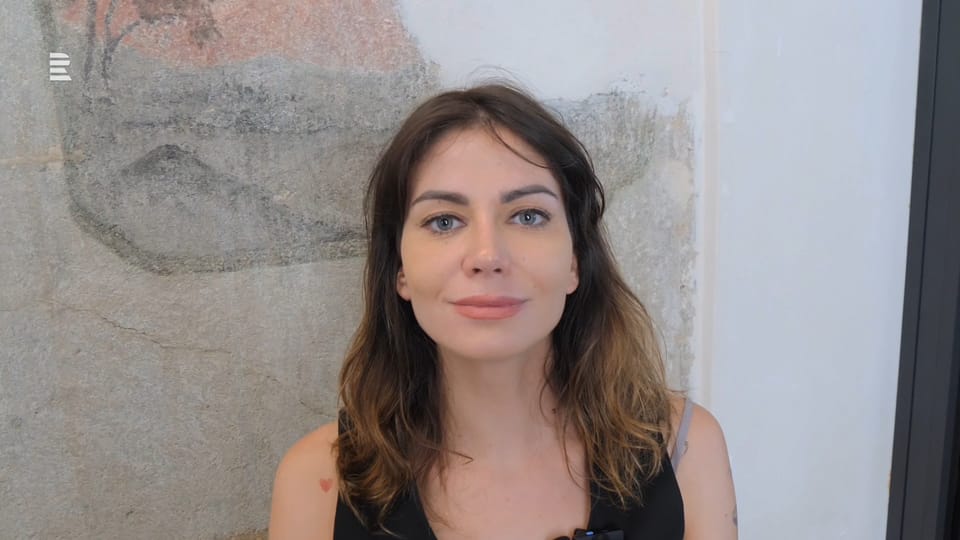
Similarly, Suwimon expressed enthusiasm about her future in the country, “I’m planning to just stay here until I retire.”
As for Nussara, she is planning on continuing with her business.
“Well, my future plans are to continue managing my Thai massage business and pass that onto my son. Czech people really appreciate massages, so they’re always in demand. So I’d say it’s a stable job.”
These personal stories reflect a growing trend among Thai nationals who are choosing to make the Czech Republic their long-term home.
As of the end of 2024, around 1.1 million foreign nationals were legally residing in the Czech Republic, accounting for about 9.8% of the total population. While Ukranians, Slovaks, and Vietnamese make up the largest groups, Thai nationals remain a small but growing group.
To support this growing population and help preserve their cultural identity, the Thais Embassy in Prague plays a role in helping Thai nationals stay connected to their roots. Events like the one held on September 5th, 2024 at the Písek Gate (Písecká brána) in Prague 6 offer a showcase of Thai cuisine, crafts, and cultural workshops help strengthen these ties. Czech visitors mingled with Thai families, sampling mango sticky rice and practicing Thai greetings.
Moreover, the embassy’s cultural initiatives go beyond annual festivals. Since 2020, they have operated a Thai language and cultural school on weekends for children of Thai-Czech families, aiming to preserve the language and values of Thai heritage among the next generation.
While maintaining Thai traditions is important, many migrants also embrace aspects of Czech life – from learning the language and local customs to participating in Czech holidays and community events. This dual sense of belonging allows them to bridge cultures and enrich both communities in the process.
Meeting individuals like Nussara, Porrapat, Kaesorn, and Suwimon reminded me that while we each arrive with different stories, we are united by a common thread – the courage to start anew while holding on to where we came from.
Through these connections – both personal and communal – Thai nationals continue to build new futures in the Czech Republic while honoring the traditions that define them.