Essential words for Czech Easter!

Easter is upon us, and with it comes a host of Czech traditions. Czechia is known internationally for its unique selection of Easter activities, some of which may raise a concerned eyebrow among foreigners.
To help you understand what happens over this holiday period in Czechia, here’s a special edition of our Czech Word of the Week series. This is our list of essential Easter vocabulary, providing you with the meaning and a bit of word history for six typically Czech seasonal terms.
1. Vejce

First up is the humble egg, the Czech word for which is vejce. Painted eggs are a common sight in Czechia over Easter, and may be hung up on branches or given as gifts. Such decorated eggs have their own term: kraslice. The egg is an international symbol of new life, and it was through this symbolism that they were connected with the Christian story of Easter and Jesus’ resurrection.
Despite appearances, the Czech word vejce is in fact distantly related to English egg! Take away the later additions of its initial v- and the suffix -ce, and we can get back to an ancestral Slavic word *ȃje, part of a word family with Latin ovum, German Ei and English egg.
2. Beránek

A beránek is a traditional type of cake baked in the shape of a little lamb. The ingredients have changed over the centuries, but a sponge cake, perhaps coated in chocolate, is a typical style of beránek today. The lamb is another popular Christian symbol, making the beránek a very appropriate cake for Easter, although its origins may have been a bit more practical: as a substitute for a real lamb, for when families couldn’t get hold of the meat.
As a word, beránek is quite straightforward. Beran is Czech for ‘ram’, a male sheep, and the ending -ek turns that ram into a diminutive word, meaning ‘small ram’ or ‘male lamb’.
3. Mazanec
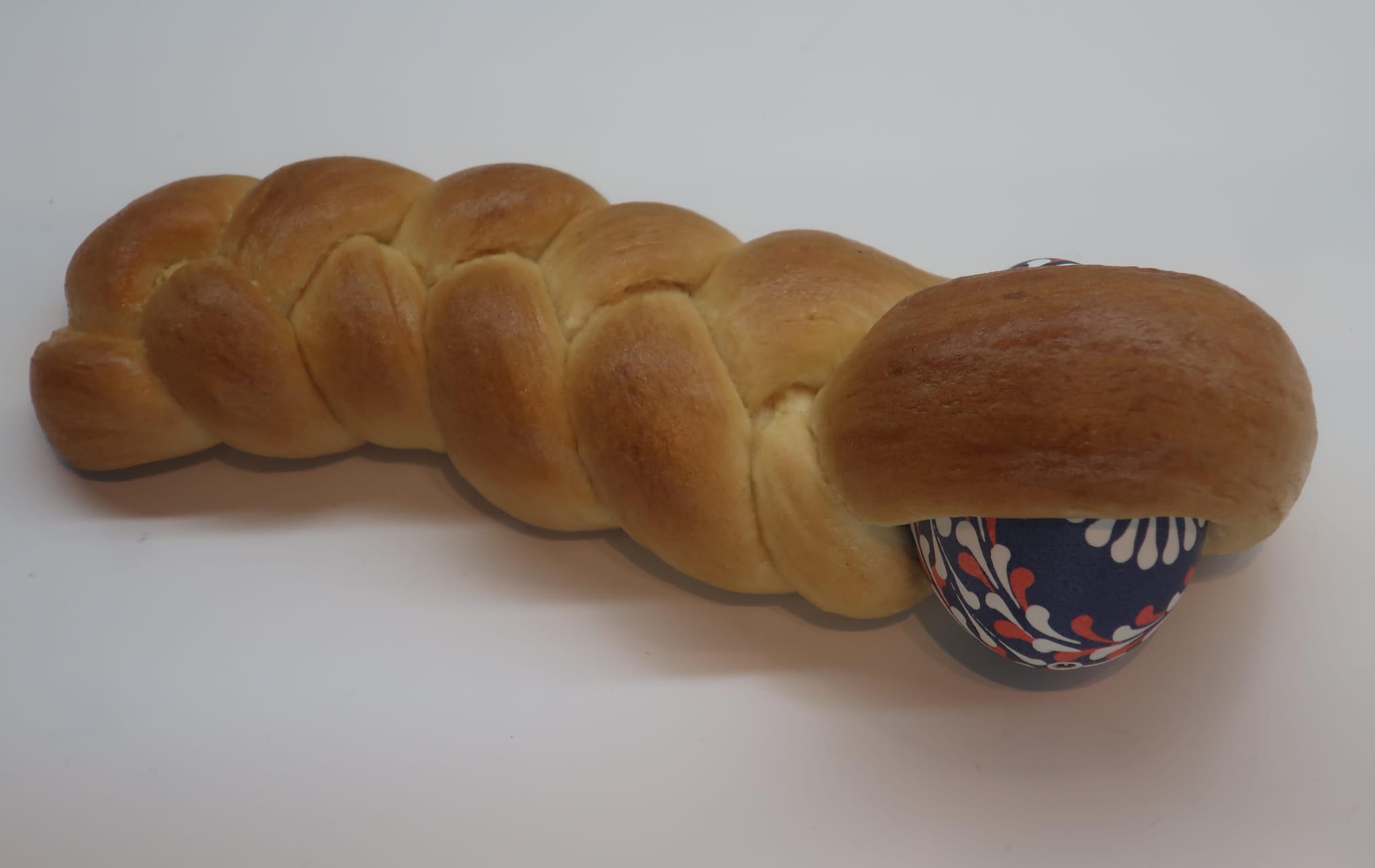
This Easter loaf makes for a delicious breakfast. Traditionally baked on Easter Saturday (or ‘White Saturday’ in Czech), this style of loaf is much like the Christmas Vánočka, except for its round shape.

Bakers will also cut a cross into the top of the loaf before baking. The dough is yellowish in colour, and raisins and almonds are added to it for added flavour and texture. A warm, buttered slice of mazanec goes very well with a cup of tea or coffee. The word mazanec itself comes from the verb mazat ‘to spread, to smear’, and it’s appropriately related to the Czech word for ‘butter’ too, maslo.
4. Jidáše
Jidáše are tasty Easter pastries, made with honey and rolled into little coils. According to tradition, they should be baked on Holy Wednesday and consumed on Maundy Thursday.
Their sweet taste and dainty appearance contrast with the story behind their name. It comes from Judas, the apostle who betrayed Jesus, and their coiled shape is supposed to represent the rope with which Judas hanged himself. It’s a dark derivation, but it doesn’t spoil your appetite.
5. Pomlázka

Now we come to the most famous (or infamous) Czech tradition: the Easter whip, called a pomlázka in Czech – although different regions may have their own dialectal term. Made from willow rods woven together and adorned with colourful ribbons, the pomlázka is used by men and boys to whip women and girls on Easter Monday. The aim is not to cause pain, but it may still sting!
The root of the word pomlázka points to the whip’s intended purpose; at the heart of the word is the adjective mladý ‘young’. The tradition goes that the whipping keeps the women young and beautiful, so a pomlázka is a ‘rejuvenator’. The whipped women themselves may well dispute this.
6. Velikonoce
Finally we come to the Czech term for ‘Easter’ itself: Velikonoce. This is clearly very different to English’s name for the festival. It's unlike the German word too, which, like the English, is Ostern. Meanwhile, French, Italian and Spanish have P-words for ‘Easter’: Pâques, Pasqua and Pascua. These ultimately descend from Hebrew and the Jewish festival of Passover (pésakh). So, where did Czech get Velikonoce from?

From Greek, probably! In Old Czech, the name is veliká noc ‘great night’, and this looks to have been modelled on a Greek phrase for Easter: megálē hēméra ‘great day’. Since the Easter schedule of worship traditionally begins at night, it was a natural step to change the name to ‘night’ instead.
So, that’s our list of Easter vocabulary to help you make the most out of Czech Easter. We hope you have a lovely time!