David Mareček: We want whole nation to feel part of success of Czech Philharmonic – it’s theirs too

David Mareček is the director general of the Czech Philharmonic, one of Czechia’s premier cultural institutions. The orchestra, launched in the 1890s with a concert conducted by Dvořák, is based at Prague’s magnificent Rudolfinum, a building that once housed the country’s parliament. And it was there that I spoke to Mr. Mareček about the selection of Jakub Hrůša as next music director – and much more besides.
Last year was of course was a big year for the Czech Philharmonic. It was the Year of Czech Music, which culminated with you going to Carnegie Hall in New York in December. What for you was the highlight of 2024?
“It’s difficult to say, but when you mention to Carnegie Hall, I think that definitely was the highlight.
“Because the Czech president came there. We could see the warm reaction of the audience. And we played wonderful programmes, three times sold out.
“Also the Prague Philharmonic Choir was there. Once with the Czech Phil and one concert was with the choir alone.
“So I think that the even if you would ask the musicians they would say the same – it was Carnegie Hall.”
After all the excitement of last year, is this year relatively easy for you?
“It’s not easy in terms of lack of work or concerts, but it’s something we look forward to very much.

“Just now, in less than a month, we are going on a big Asian tour that starts in Taipei then goes to Japan then South Korea.
“Then in spring it’s La Scala in Milan, which is always a highlight, because the building is simply magnificent and you can feel the spirit there. And Vienna and also Germany, so it will be an ‘ordinary’ year in the best sense of the word, and we’re looking forward to it.”
How important is touring to the orchestra, in terms of finance, or earning money, and also prestige and reputation?
“It’s especially important for prestige and reputation.
“Financially, many of the tours are in red numbers, meaning that we lose money.
“For example, America – whenever we go to the United States we need sponsors, we need state support.
“In Asia we can still get some money. But the most important thing is to be in touch with our audience abroad, because this is something that cannot be done by a live broadcast.
“Of course that’s better than nothing, but when you actually come to the Suntory Hall or Carnegie Hall or the Seoul Arts Center and when you see the reaction and when the audience feel the Czech Philharmonic, that really makes the reputation of the orchestra.
“That’s what generations before did and we want to do it as well.”
When you say it’s loss-making if you go to America, why bother going to America? You can go to other places where you won’t lose money.
“Because we have a large audience in America.
“And in America they are many of the greatest orchestras, including the New York Phil, the Chicago Symphony, the Boston Symphony, the Philadelphia Orchestra, the LA Phil and many others, and it’s important to be present on the market, because the audience is there.”
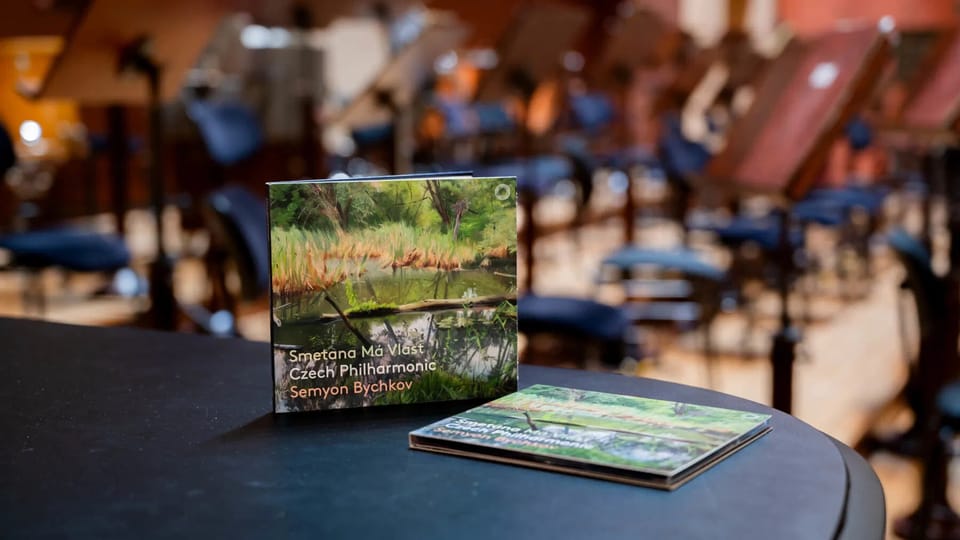
This year you announced that your next chief conductor will be Jakub Hrůša, who is going to succeed Semyon Bychkov in 2028. What were the factors that led you to choose Mr. Hrůša? What was on your list of criteria?
“It was quite clear when Semyon Bychkov announced that he wanted to step down in 2028 Jakub Hrůša was the only candidate.
“First of all, he is one of the best conductors today. And given the fact that he is not only one of the best but is also Czech, and he was willing to come back to the Czech Philharmonic, or to come as music director, that was important.
“Jakub Hrůša was the only candidate, and we are happy that we came to an agreement that he will start in 2028.”
David Mareček
“Above all this was the concept. Because we discussed for quite some time the way he wants to lead the orchestra, the things he wants to achieve with the orchestra.
“And that was very much in line with what the artistic committee wants, what we as the management want.
“So yes, he was the only candidate, and we are happy that we came to an agreement that he will start in 2028.”
Is he relatively young to get such a position?
“Yes and no. He is relatively young compared to Semyon Bychkov, compared to Jiří Bělohlávek, compared to many other previous music directors.

“But, for example, when Rafael Kubelík became music director of the Czech Phil he was much younger than Jakub Hrůša is.
“So I would say that he is just in the right age for the position.”
About your own work, what do you regard as your greatest skill, or the skill you need most to do your job here?
“It’s communication. That’s the most important skill, because you need and you want – and I enjoy it – to communicate with the musicians of the orchestra, with the conductors and soloists, with colleagues in the building, with our supporters from business and beyond business, with politicians.
“So it’s very varied, very colourful. You have to be flexible. But above all you have to be open and try to communicate the best you can.”
Do you yourself also have to be a kind of politician to some degree? You represent the organisation but you’re also, I guess, charming potential people who can give you money.
“I think you have to be diplomatic.
“Being a politician is different, because we don’t take sides.
“But we need to speak with everybody and I need to defend the orchestra in front of any politician, any business people.
“So I think the word diplomatic is the right one.”

How does it work, say, if you get a financial commitment from one minister of culture and ministers change? We can expect a change in the not too distant future. Also in the classical field you’re planning very far into the future. How do you plan for those political changes, and potential changes to your state support?
“You cannot really plan that. Because we don’t know what will happen after the elections, despite the fact that we can see how, approximately, it will be. But we don’t know what the coalition will be like.
“We try to be in close touch with the management of the ministry. That means not only the minister but the people who are there permanently.
“And we try to discuss long-term projects with the whole ministry and all the politicians, so then we hope that it stays like that.
“On the other hand, we can never predict.
“So we try to be ready and we try to think long-term and to speak long-term with as many people as we can.”
When it comes to your financing, how much of it comes from private sources, and how much from the Czech state?
“The Czech state is more than half of the budget, and private sources are now close to 20 percent.”
Could you describe how you work with private sponsors? What’s the procedure? What kind of companies do you tend to work with?
“It’s more the work of my colleagues from the fundraising department.
“But, to put it simply, we try to build a long-term trust and a long-term relationship.
“That means we don’t try to get money quickly, but we try to build a relationship first – and when the relationship is established then we usually get the support for a long time.”
Are there some kinds of companies that you wouldn’t like to be associated with, for example arms makers or other potentially controversial sponsors?
“We always discuss a potential sponsor internally. And when there is a controversy within the team, when not everybody thinks that we should accept, then we don’t.”
Prague should hopefully get in 2032 the new Vltava Philharmonic Hall. What are the Czech Philharmonic’s plans in connection with that new venue?
“We want to be one of the resident orchestras. We will stay in the Rudolfinum as our main hall, but we want to play at least one big series of concerts at the Vltava Philharmonic. We want to rehearse there.
“We want to be one of the Vltava Philharmonic Hall’s resident orchestras.”
David Mareček
“And it’s simply because of the size and of the quality.
“So, for example, if you imagine the Rudolfinum, it’s ideal for the music of Mozart, Beethoven, even Dvořák and Schuman.
“And the Vltava Philharmonic – anything like Gustav Mahler, Shostakovich, Josef Suk, Richard Strauss and other composers that use big orchestras.
“So we will divide the programme according to the size and to the type of the hall, and we will be in both of them.”

The Rudolfinum is an amazing place, it’s a beautiful building. But does it have certain restrictions in terms of what you can do here, apart from just the size of the productions?
“No real restrictions. It’s really about the size.
“But, for example, Mahler’s Symphony no. 8, which we performed at the Prague Spring festival, couldn’t be done here with an audience.
“We still recorded the work in the hall, but this is a physical restriction.”
What about the plans to have some kind of terrace on the roof here – how are they coming along?
“We already have the project and we are now talking to private sponsors, because this should be a private project, and we hope that the terrace, if everything goes well, should be ready in two years.”

Is the idea that it could be open to anybody who’s just passing? You could just come in, go up, have a coffee and pay whatever number of euros.
“We don’t know if they have a coffee on the terrace [laughs], but the plan is to be part of the building.
“So whenever you go to the Rudolfinum and there is no concert or private event you should be able to go to the terrace, because it’s one of the best views of Prague.”
The Czech Philharmonic owns the Rudolfinum, is that correct?
“The Czech Republic owns the Rudolfinum and the Czech Philharmonic runs it, because we are a state organisation.”
But you also rent it out for various events. What kinds of events take place here?
“All kinds. Mainly concerts of the Prague Radio Symphony Orchestra, the Prague Philharmonia, the big festivals: the Prague Spring, Dvorák’s Prague, and also Prague Sounds.
“But also concerts of film music or, for example, the Czech Lion [film awards] and other social events. So, you can imagine, almost anything.”
This is a bit of side question, but when it comes to your audience do you pay any attention to where they come from? I presume the majority are Czech, but what percentage of your audience would be visitors, do you know?
“Yes. My colleagues from the communications and marketing department have the exact data.
“The percentage of visitors is relatively low. In a way we like that, because our audience is very loyal.”
David Mareček
“And the percentage of visitors is relatively low, or lower than for example the National Theatre.
“And in a way we like that, because our audience is very loyal, mainly subscribers or a Czech audience, or people who live in Prague, because Prague is also quite international.”
You’ve been working here in this position for almost 15 years. How is it for you coming here every day to this amazing place, and your amazing office? What’s it like having the Rudolfinum as your place of work?
“It’s great. First of all, it feels like yesterday – I wouldn’t say that it’s been almost 15 years, even though I know it.
“And I have to say every morning when I come to the building I feel privileged by being able to work here.
“So I still enjoy it very much.”

I wanted to ask you about Bryce Dessner, who is also in the rock band The National. He is the Czech Philharmonic’s first composer in residence ever. How much time is he actually spending here with you?
“Physically not so much, because he will be a soloist in one of the subscription concerts: he will play in his composition Saint Caroline by the Sea.
“But there will be many compositions of his during the season. One of them is this Saint Caroline, conducted by Jakub Hrůša.
“Every morning when I come to the building I feel privileged by being able to work here.”
David Mareček
“Then the cello concerto that he composed for Anastasia Kobekina. That will conducted and played by Semyon Bychkov.
“Then some chamber music performed by one Czech string quartet and one Danish string quartet. So it’s a really full, big residency.”
Is it something that you are planning to do every year, to have somebody in that role?
“We want to have an artist, or artists, in residence every year, but not necessarily always composers.
“They can be soloists, like Evgeny Kissin, who is also an artist in residence, but they can be in the future also conductors. And sometimes conductor-composers, like the case of Thomas Adès, who is coming to one of the subscription concerts and will be conducting not only Kurtag and Boulez, but also his own compositions.”
When it comes to programming how do you balance new music and the kind of well-known pieces that, I guess, are guaranteed to fill the hall every time?
“We try to find the right type of balance, which in the case of the Czech Philharmonic means a little bit less new music, but compared to previous seasons it’s now more.

“And it’s like the menu in a restaurant. I think the audience, the guests, want something they know. They want something that they know they will enjoy.
“And at the same time we want to offer them something they can explore. Sometimes they like it, sometimes they don’t, but it’s always worth exploration, and still having something that we know they will like.”
What are the pieces that you know are always going to be a massive hit?
“It’s always Dvorák’s New World Symphony, or anything by Dvorák.
“It’s also Tchaikovsky, which will open the season: the Symphony no. 5, with Semyon Bychkov.
“It’s also Beethoven’s Symphony no. 9. So quite obvious pieces.”
I notice in the last year or two that you are doing really active social media. You had a great little video when you went to Carnegie Hall, the scenario of which was you “forgot” Mr. Bychkov. Also I believe you brought the journalist and influencer Janek Rubeš with you to London and New York. Why are you doing that?
“Because we want the Czech Philharmonic to be present more widely.
“It’s not only about attracting an audience, because, thank God, the concerts are mostly sold out.
“It’s like the menu in a restaurant. I think the audience, the guests, want something they know.”
David Mareček
“But we want the general public in the Czech Republic to be aware of what the Czech Philharmonic is doing, because it’s representing the country in, I think, quite a spectacular way.
“I think I know Czech people and they want to be part of it. When they watch ice hockey or football and whenever there is a success they feel part of it.
“So we want them to feel part of the success of the Czech Philharmonic. It’s theirs as well.”
In the longer-term, do you feel that you need to maintain the position of the Czech Philharmonic? Or are you trying to, to use the modern language, grow the brand?
“[Laughs] We always try to grow the brand, but in a natural way.
“That means that we want to incorporate more international music into our repertoire, but at the same time to keep the tone and keep the spirit of the orchestra as it was 130 years ago
“Not in a historic way – we want to be modern – but we want to be something you can rely on and something where you feel well.”
You are the biggest institution of your kind in this country and the most important. But do you feel a certain kind of competition with other European orchestras?
“It’s difficult to say whether it’s competition.
“Because the market for classical music is relatively small, but still big enough to have all the orchestras in it.
“I think it’s more an inspiration. We look at orchestras in Germany, for example: the Berlin Philharmonic or the Bavarian Radio Symphony Orchestra.
READ ALSO
“We look at the Vienna Philharmonic, the Concertgebouw Orchestra in Amsterdam, the London Symphony.
“And we try to see what they do. They try to see what we do. And we can inspire each other.
“Of course it is, to a certain limit, a kind of competition, but I think it’s healthy.”
You yourself are a musician: You’re a pianist and you perform and record. Given your high-pressure job, how do you find the time even to keep your playing at the necessary level?
“It’s quite easy. Some people do sports, some people play chess, some play do meditation or read books – and I play the piano; I don’t do the other stuff
“I also feel that it’s good for my mind. You say it’s high-pressure – it is. And it’s also very quick: you have to call people, you have to speak to people, you have to write things.
“And when I play the piano I’m just alone and I can concentrate so. So I hope it’s also good for the job – that it makes the right balance.”
Note: This interview was conducted a few days before the orchestra's 2025/2026 season began on 25 September.
Related
-

-

Faces of Czech Music
Dvořák, Smetana, Janáček, Martinů – Czechia can boast a number of renowned figures from the past, but what about Czech music today?