From Czechia to Myanmar: Karlovy Vary unveils 2026 Crystal Globe competition line-up
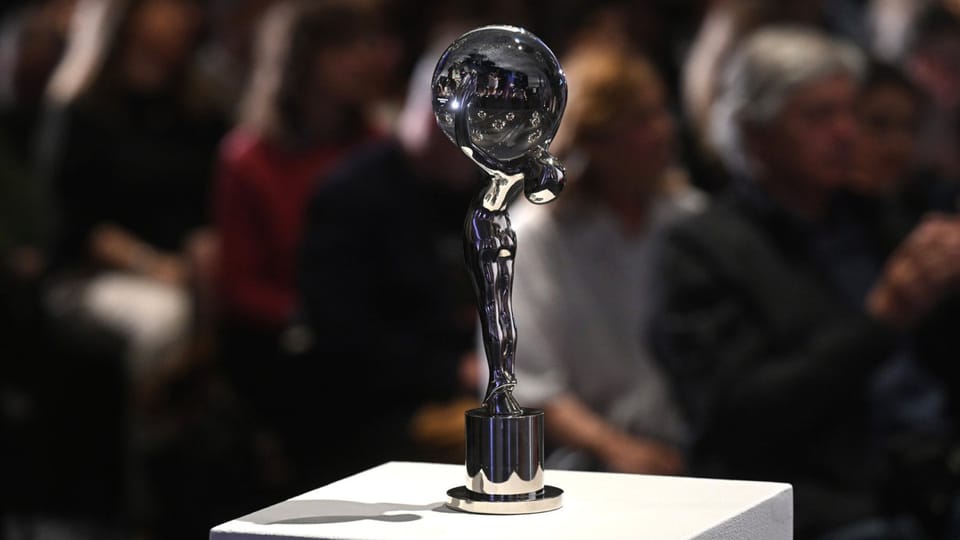
The 12 contenders for the Crystal Globe at the 60th edition of the Karlovy Vary International Film Festival have just been revealed. They include one Czech picture as well as works from as far afield as Myanmar and Lebanon. Meanwhile the region’s biggest celebration of cinema will have more special screenings than ever. I discussed this year’s selection with artistic director Karel Och at a presentation on Tuesday.
There is one Czech film in the main competition, Chica Checa. What kind of film is that, and how did it make the cut when other Czech movies didn’t?

“We could define Chica Checa as a melancholic dramedy. It’s a new film by Simon Holy who is today a well-established filmmaker.
“This is his fourth film. We were very pleased to introduce his first two films in Karlovy Vary and, I hope, to somehow contribute to his maturing as a filmmaker.
“His new film is moving to another level of filmmaking. It’s a very heartwarming, tender film about the relationship of a mother and her son, who is coming home after a longer absence.
“This film talks in a very beautiful and intense way about the time we have with our loved ones – and the fact we should not waste it.”

Karlovy Vary is of course an international festival. But still this year it strikes me that in the main competition countries are represented that aren’t usually there, such as Myanmar and Lebanon. Is there any particular reason for that?

“It’s just a coincidence, I’d say. We certainly did not work on the main competition this year with the idea of including more, let’s say, exotic countries, if I put it stupidly.
“There is Colombia. There is Switzerland, for the first time ever.
“I’m very happy that what you just mentioned is happening exactly this year, when we are celebrating 60 festival editions during 80 years.
“Because we’re looking back into our history more often, for obvious reasons, and I will never get tired of mentioning one of my predecessors, Professor [Antonín Martin] Brousil, who was one of the founders of the festival and a long-time programme director.

“Back in the early 1960s he established a programme called Symposium of Young and Emerging Cinematographies from Asia, Latin America and Africa, which not only brought films from those continents to Karlovy Vary, but also the filmmakers, which was not at all usual in the early ‘60s.
“So whatever is happening this year with the main competition in terms of the ‘unusual’ countries, we like to think it’s somehow connected to the past of Karlovy Vary.”
Among the highlights every year are the Special Screenings. This year it seems there are more than usual, including many interesting-looking Czech titles. Why have you expanded this section?
“It’s always about what the producers and filmmakers offer to you.

“This year’s selection of Special Screenings is particularly interesting and diverse. It includes films where each one of them is a world unto itself, between documentaries and fiction, with unusual portraits of celebrities or, let’s say, professionals.
“I would like to mention the late Japan expert Peter Geisler, who was a sort of known-unknown personality who was, until now, mainly known as the father of the Czech actress Anna Geislerová.
“But, as viewers will witness when they watch the film [A Pint of Ink], he was much more than that. He was someone who learned Japanese in a way Japanese people admired; it was flawless.
“He was a journalist, he was a calligrapher – he was many things.
“And Ester Geislerová, Anna’s sister, has created a very beautiful, unusual portrait of their father.”

Does the expansion, this year at least, of the Special Screenings mean more world premieres, and more “pressure” on the red carpet, or red carpets?
“We’ll see about that. I can honestly say that we don’t really think about these things while discussing the films with my colleagues.
“We then, at the end of the selection process, look at it and say, Jesus, we have more films than usual, so we will have to do this and that.
“But there is now way that we will give up on these films. Because when you fall in love with a film and you’re lucky enough to have it confirmed and have the makers accept the invitation, you always create new conditions to show the film.”






