Court ruling sends Czech–Vatican treaty back to the drawing board

The Constitutional Court has stopped the ratification of the Czech Republic’s treaty with the Vatican on the grounds that parts of it are in conflict with the Czech constitutional order. The treaty, which was 22 years in the making, will thus have to be revised following further negotiations between the contracting parties.

The treaty with the Vatican, signed in 2024, formalized relations between the Czech Republic and the Holy Sea. The agreement guarantees religious freedom, protects the seal of confession, and facilitates pastoral work. Together with the restitution of church property, it was hailed as a big step in righting the wrongs inflicted by the communist regime.
Now, the last phase of ratification – the president’s signature - has been stopped by the highest court in the land, which upheld a complaint by 17 senators, ruling that parts of the treaty are in conflict with the country’s constitutional order.

The Court’s first reservation pertains to the fact that the treaty states that “the Czech Republic recognizes the confidentiality of confession,” without further specification. According to the Court, this grants the Catholic Church privileged and unconditional protection of confessional secrecy, which discriminates other churches in the country.
The second disputed provision states that church legal entities will make their cultural heritage available to researchers, but under conditions they themselves determine, which, according to the Court gives them a strong tool to withhold access to documents or archival materials.
In view of these arguments, the Court concluded that, in its present form, the treaty would give the Catholic Church its own legal regime and a privileged position that violates the state’s religious neutrality.

The petition against the present wording of the treaty was signed by seventeen senators. Senator Vaclav Laska who spearheaded the effort said that it was not merely a protest in principle regarding religious inequality – but a serious lapse that could hurt victims of sexual abuse within the church.
“The working of treaty in its present form would mean that priests would not be bound to report or prevent a crime that they learn about due to the stated unconditional protection of confessional secrecy.”

The Pirate Party, which voted against the treaty, backs this view. Olga Richterova is head of the party’s deputies’ club in the lower house.
“The treaty gives advantages to a single powerful entity and restricts the protection of victims, for instance victims of sexual abuse.”
Not everyone agrees. Civic Democrat MP Marek Benda says he is disappointed with the ruling.

“The reservations are simply fabricated. What some people don’t like is the fact that the Catholic Church is historically the strongest church in the land and therefore has a special status. “
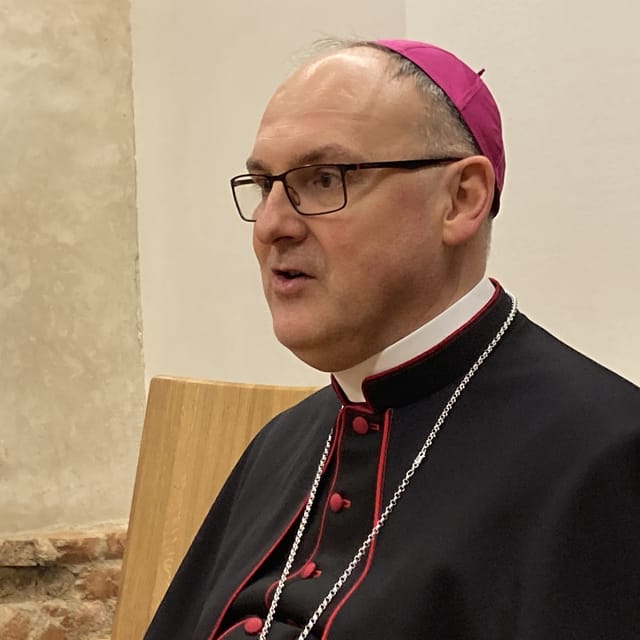
Prague Archbishop Stanislav Přibyl likewise told reporters that he is not happy with the decision, but says the Church respects the Court’s verdict.
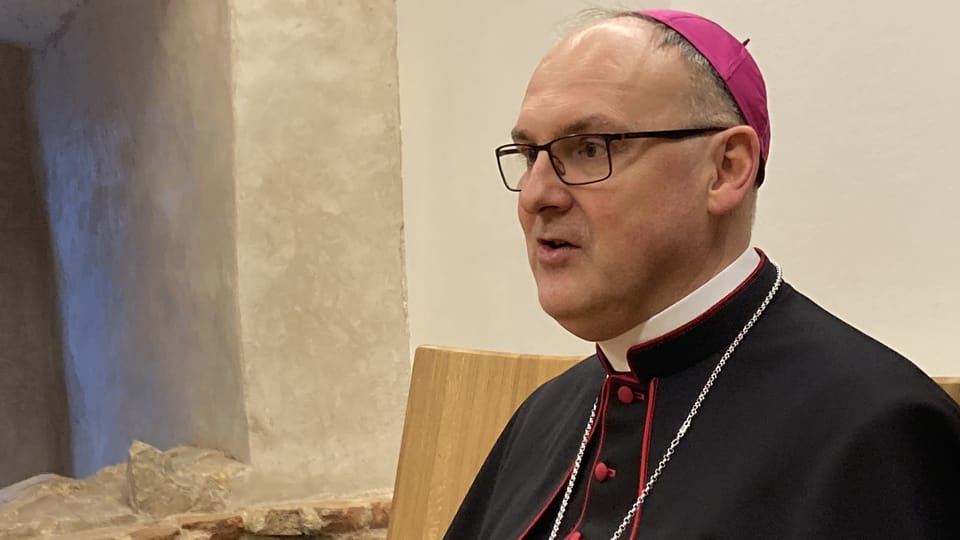
“It is a pity that so much work has gone down the drain. But I was happy to hear that the reservations expressed were not against the whole treaty but just against two specific points.”
The government is now studying the legal conclusions arising from the ruling. Foreign Minister Petr Macinka said the next step would be to consult experts in view of restarting the negotiation process so that, in agreement with the Holy See, the treaty takes a form that is not in conflict with the constitution. In his view any new version of the treaty should also be reviewed by the Constitutional Court.

How long work on a new treaty or a revision of the old one may take remains unclear. Experts say the wait for a new apostolic nuncio may slow down the negotiations. The successor to the current nuncio, Jude Thaddeus Okolo—who, after less than four years in the Czech Republic, was appointed the Vatican’s ambassador to Haiti—has not yet been named.