Colin Stuart on helping shape ‘90s Czech indie music – and much-loved Colorfactory

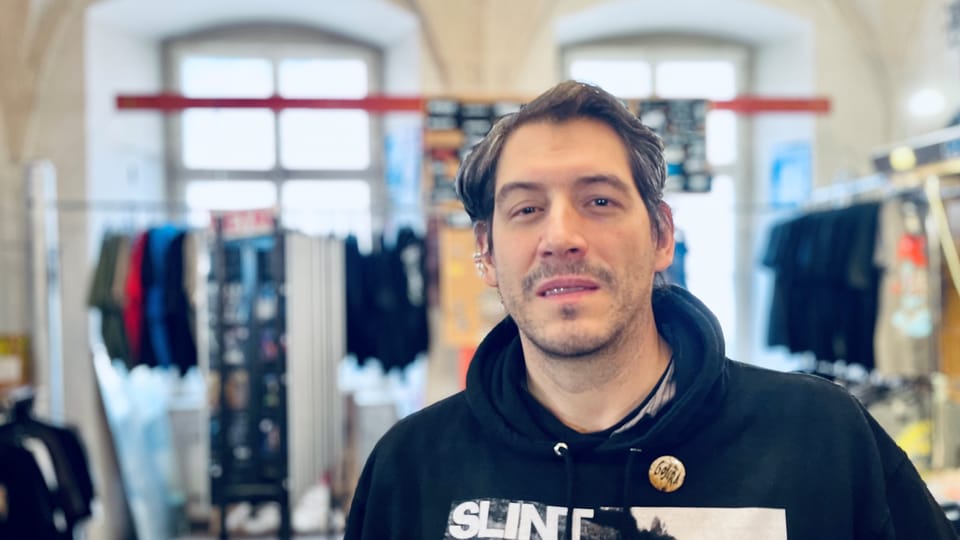
Colin Stuart has been a fixture on the Prague music scene since the early 1990s, when he produced the Ecstasy of St. Theresa and several other local bands. He also worked with musicians from those groups on Colorfactory, a project that reached large audiences when the music was used in the era-defining film Šeptej (Whisper). I spoke to Stuart at his studio just around the corner from Prague’s Dancing Building.
How did you first get started in producing and engineering music?
“I had a band when I was 18 years old. We wrote our songs, we started recording in studios, and the results were always absolutely terrible.
“First we tried an eight-track studio, then a 16-track – we’d saved up money from playing concerts – and the results were so terrible. It was a complete waste of money.
“We couldn’t afford to go into professional, 24-track studios, so I said, OK, sod it, I’ll learn how to do it myself.
“So I got a couple of microphones, a cassette recorder and just started with my band in our garage where we rehearsed.
“I soon moved on to recording to reel-to-reel tape recorders, then on to a four-track cassette player, the first Portastudio – I bought one of the first that came into England – and got started.
“I made a punk, ‘oi oi’ version of Mull of Kintyre by Paul McCartney just for a joke at a sound-check, when I was recording the punk band The Members.
“Somebody heard that and said, Oh, I hated that song, I want to release this.
“And strangely enough it ended up being released and played on Radio 1, so what I recorded on cassette was on national radio. That was my first single.
“Then I did a favour for one of my friends, the drummer who was playing with us. He came and asked me to help him fix a car. He’d broken his sister’s car.
“I was able to fix it very easily, because I’ve always been handy with tools. He offered to pay me and I said, Buy me a beer – I don’t charge my friends for such a small job.

“He told his dad about this – and his dad was Paul McCartney’s business manager. A bit like a mafia guy, he was like, He’s done us a favour so we owe him – what does he need?
“My friend said I needed a job. And this manager guy asked what I did and my friend said I was a sound engineer.
“So a week goes by and I know nothing about this conversation. And out of the blue I get an invitation to go to Abbey Road Studios.
“I get a tour of Abbey Road Studios and then the boss says, You’re not on the professional level of the engineers we’re looking for, doing 24-track recordings, but because you’re a technician as well as an engineer, you should get a job on a mobile studio – we’ll ask around and see about that.
“A week later I get an invitation from a mobile studio which turns out to be the Rolling Stones’ mobile.”
Which they had recorded on at the chateaus in the south of France.
“It’s the mobile studio that is actually mentioned in Smoke on the Water. They sing, ‘To make records with a mobile’.
“And that studio was bought by a company in London. I went up to see the boss and he said, Can you start today?
“I had come from garages recording punk bands and one of the first gigs I did was recording Bob Dylan.”
Colin Stuart
“So that threw me into the world of absolutely the top of the music business.
“I had come from garages recording punk bands and one of the first gigs I did was recording Bob Dylan at Slane Castle in Dublin.
“My job was to sit on the stage and fix anything if it went wrong. And of course with professional equipment almost never did anything go wrong.
“So I got to sit and watch Bob Dylan, BB King, Paco de Lucia, Ultravox – any band you can name.”
And you also had a connection with Steve Lillywhite, who was a famous producer in those days, working with the likes of U2 and lot of other big acts?
“Yeah. After a couple of years on this mobile studio the boss saw me playing a guitar on stage in Madrid and he said, I’ve realised you want to be a musician and not an engineer – you’re not really interested in engineering.
“I said, I can’t make any money out of being a musician, so I’m quite happy being an engineer.

“But he said, I want people who are interested in engineering and want to be the best engineer possible – you should be a musician or a producer.
“So basically he fired me. For a few months I was recording with other bands. I started working with the individual members of Kajagoogoo, who had had a massive hit and then split up; I made demos and some records with them.
“Then I started making a song with my old friend, who was Steve Lillywhite’s brother, Adrian. Adrian recently passed away and he was the drummer in my first band.
“He came to me and said he wanted to make a song with his wife, a very attractive singer. So I wrote a song for her and we recorded it and we were mixing it in Steve Lillywhite’s studio.
“I hadn’t seen Steve Lillywhite since we were at school. He was in my brother’s class, I think, but I knew him to talk to.
“I was working in his studio, mixing this song with his brother, and he came back from America, a day or two early, and surprised us.
“Steve Lillywhite said, I’ve got to do some remixes of Talking Heads – can you help me out?”
Colin Stuart
“I thought he’d be upset but he was like, Oh, you know how this mixing desk works? I said, Yeah, roughly.
“He had a big, beautiful AMEK mixing console, but I knew mostly how it worked. And I finished doing this single for his brother and he said, Hey, I’ve got to do some remixes of Talking Heads – can you help me out?
“I said, Well, twist my arm – I absolutely love Talking Heads.
“He was married to the singer Kirsty MacColl, who sang on the Christmas hit Fairytale of New York with The Pogues.
“I’d only ever said hello to her a couple of times at her front door but I didn’t know her at all. But she came into the studio and said, Hey, I’ve written a song.
“She’d had writer’s block for a couple of years; she’s had kids and couldn’t really get herself back into writing songs.

“And she said, Hey, Colin, you can play guitar, can’t you? She thrust a beautiful old Gibson guitar into my hands and in 10 minutes we’d recorded a song called Fifteen Minutes.
“So then I started working with Kirsty MacColl. When her husband was away I was producing stuff and engineering stuff with her, and when he was there I was his engineer and assistant.
“And I spent a year and a half working in their home studio. I had some great times there.
“A couple of times I went there to record Johnny Marr. He was a good friend of Kirsty’s. A couple of times he turned up and she was still in bed and he said, Let’s go in the studio and jam.
“And I was like, Am I dreaming or what? Johnny Marr is asking me to jam with him in the studio?
“He played my Guild guitar and said, Oh, can I buy this off you? I said, No, I wouldn’t sell it for any money. And he said, I wouldn’t if I owned this guitar.
“I learnt quite a few things from watching him just jamming around and just exploring ideas.
“And of course once Kirsty woke up she’d come into the studio with coffee and we’d all start working for the day.”
Moving on to Prague, what brought you to Prague? And when did you come?
“I did an album and a half with Kirsty and then I got a phone call from California from a musician I knew. He said, I’m in this band and they’ve got some recording equipment but they don’t know how to use it – will you come over and record some demos for us.
“They offered to pay me so I said I would come. I had nothing else to do.
“So I go to California and it turns out this band are called The Colorfactory. Their main guy, Michael, had written some nice songs.
“I tried recording them but they were really untogether. They only played one gig. They were way more into drugs than music, so nothing really happened.
“I came here for Christmas ’92 with my guitar and my suitcase and thought I would be here for a couple of weeks.”
Colin Stuart
“But I did my best and recorded eight or 10 songs. And then they threw me out of their flat, which was pretty strange, because they didn’t pay me. They were supposed to be paying me for this work but they said if I couldn’t pay the rent I had to move out.
“Fortunately one of their friends thought this was very bad treatment of me by them. So she took me in. I then left and came back to England and she came to visit me and then she came to Prague.
“To cut a long story short, she invited me to Prague. I came here for Christmas ’92, I think it was, with my guitar and my suitcase and thought I would be here for a couple of weeks and see what things were like in Prague.
“My American girlfriend told me they’d had a revolution here and there was an amazing atmosphere around concerts and the general enthusiasm for music was off the scale.
“When I arrived here I found that to be absolutely true. And the first Czech guy I spoke to was Jan Muchow.”
Jan was from the group Ecstasy of St. Theresa, who were the best-known Czech shoegaze band. This year there was a new book about Czech shoegaze and the author called you the “shadow architect” of that scene. What was your involvement with that world? I guess you produced pretty much everybody on the scene?
“When I met Jan Muchow my American girlfriend’s sister said to me, That guy’s got the best band in Prague. We were sitting in the Bunkr club and she said really fancied him or something.
“I said, I’m not so interested in how he looks, but if he’s got the best band in Prague, I’d better go and speak to him.
“So I walked over and asked how he was doing and he said, Oh, we’re just making our first album, we’ve made an EP and now we’re making an album.
“I said, That’s what I do, I make albums. And he said, Oh, will you help us?
“So straight away, I’d been here two or three days I think, I had a job.
“I spent a month making Susurrate, which is one of the strangest sounding albums you’ll ever hear. Lots of people said it sounds like you’ve got fluff on your needle when you play the record, when you haven’t.
“I went to the shop to try and buy a copy when it was first released and the women in the shop didn’t want to sell it to me. She said, We have to send these back, they’re not pressed properly.
“I said, Can I listen to it? I did and I said, No, it’s supposed to sound like that.
“She said, It can’t be, there’s almost no high frequencies. And I said, Well, that’s how the band wanted it to sound, so that’s how I made it sound for them. It’s not my sound, it’s their sound, but I did what they asked me – that’s the job of a producer,
“Then I went on to record the Sebastians, I recorded Toyen, I recorded Here. I think I did Naked Souls. Also a few other smaller bands.
“At one point somebody called me the father of independent guitar music, post-communist or something. But basically I did my thing and recorded the bands as best I could.
“And then the Colorfactory project came up, which was the songs I had recorded in California.
“The guys I’d been recording, especially the Sebastians and Ecstasy, they heard those tapes from California and got a project together to record at the Rudolfinum.”
So those songs on the first album, Colorfactory, existed from your time in California and they were simply recorded here by these Czech guys, including the Czech vocalist David Volenec [of Sebastians]?
“Yes. We recorded in the Rudolfinum, which was the first ever pop record, I think, recorded and mixed in the Rudolfinum.
“[Colorfactory] recorded in the Rudolfinum, which was the first ever pop record, I think, recorded and mixed there.”
Colin Stuart
“I’d mixed the Sebastians’ record there because it was the only the place in the Czech Republic that had an SSL mixing desk – that was the kind of standard I’d been used to in London studios.
“So I was very happy to work there, but of course the old communist structure was still in place, so it was very difficult to arrange things and do business with these people.
“You couldn’t book the studio for a day or for a week or for however long. You had to pay for every four-hour session. There were no discounts for being in there for a longer time.
“So we recorded there at night, because it was cheaper. We had everybody on the stage in the Rudolfinum.
“We quickly realised we couldn’t use the bass in a huge hall like that, so we had the bass in headphones. This is back in ’93 or ’94 and they had cordless headphones. I was amazed – I’d never seen this technology.

“Then we realised the singer, David, was kind of blowing out the acoustic in the room every time he hit a higher note.
“So we had the bass player sitting on stage with us, but only playing into headphones. We had four guitarists, I think: Jan Muchow from Ecstasy, Igo Heger from Toyen, Dušan Lipert from the Sebastians and later Ohm Square, and me.
“By that time I was already married, I think, and my Czech wife, Iva, played Fender piano.
“We did the recording in two nights and we then spent, I don’t know, eight months using down time or free time or any cheap time we could get mixing.
“We also added Miloš Vacík on percussion and Jiří Stivín on flute, and a couple of other guests.
“And just as we were finishing mixing David Ondříček came and said, Hey, can I use this music in my new film.
“I was like, Yeah, sure, that’s no problem for me. And I just went back to mixing.
“Basically, I didn’t know him so I didn’t pay too much attention.
“And then Šeptej [Whisper] came out. Most of the records I’d made sold two or three thousand copies in Prague – that was pretty average for the underground scene here – but the Colorfactory took off because of the film and we sold 25,000 albums.”
For me that is THE album of the ‘90s in Prague and I still play it often. I presume you must get a lot of people of my generation who approach you or tell you what that album means to them, even all these years later?
“Yeah. We played a few gigs with Colorfactory and for a while it was OK. Then there were tensions within the band – it was quite hard to play with seven, eight or nine people.
“And it was very soft music, so it was very hard to get the sound right. We had to play in theatres.
“We played a few festivals, but we couldn’t play in clubs because if anyone was talking or making a noise while we were playing we couldn’t make the atmosphere.
“And the atmosphere is the most important thing on that record. There’s no great musical playing or anything – we just did very mellow, slowed-down versions of Michael’s songs from California.
“Just as we were finishing mixing David Ondříček came and said, Hey, can I use this music in my new film.”
Colin Stuart
“After the band split up I got into doing live sound for bands. I travelled around with lots of different bands through my years in the Czech Republic.
“And literally every town I’ve been to, almost every time I go to a gig, there’s a few people who come up to me and say how much they love the film Šeptej and how they love Colorfactory and what it meant to them.
“They’ve always been asking me about a reunion and I always tell them, I’m totally up for doing a reunion but unfortunately I can’t sing those songs; David has a higher voice than me.
“I tried for a while. I stopped drinking and smoking, I tried to focus on practising a lot, but my voice just wasn’t the right voice to sing those songs.
“So eventually we gave up and the band fell apart.
“Several times over the years I’ve tried to get people interested. Of course there’s lots of fans interested in a reunion, but David was never really interested.
“He lost his taste for performing live. And, you know, some people love to be on a stage, and some people get nervous or frightened or just don’t feel comfortable on stage.
“And that brings us up to date: I had a phone call from Jan Muchow a couple of months ago and he said Šeptej is having a 30th anniversary showing at Karlovy Vary film festival.”

Next year?
“This year coming, yes. And he said, After the showing of Šeptej, they’ve asked the original Colorfactory to reform and play a gig.
“And I said, Well, if everybody else is up for it of course I’m up for it. I’ve been waiting 20 years for this.
“And Honza Muchow said, Yeah, I’ve already asked everyone and everybody else is in.
“People come up to me and say how much they love Šeptej and how they love Colorfactory and what it meant to them.”
Colin Stuart
“So it’s already in the planning stages. I’ve just had my Fender Rhodes piano – that came from Abbey Road Studios; it was also through my friend’s dad that I ended up with that.
“I’ve just had that serviced and tuned up ready for the concert.”
So you’re ready to go?
“Yeah, we’re all ready to go. I’ve got my acoustic guitar and I’m working on new microphones and pick-ups for that, because I’d like to get a really nice, good sound when we start playing again.
“And I’m really looking forward to it.”
My final question: I presume that you’re glad that you washed up here in Prague all those years ago?
“Yeah, I’m extremely glad, even though the Czech language is a very hard language to learn for a lot of foreigners, and very hard to pronounce.
“I’ve slowly picked up; my understanding of Czech is now quite good. And even though I still speak like a five-year-old and make lots of grammatical errors I don’t think my friends mind too much.
“But the mindset of Czech people is much more in tune with my vibe than average English people, to be honest.
“I got really sick of the violence in England. When I was a teenager I was a hippy and I was constantly being chased around by skinheads.
“People were fighting in bars every weekend. It really was not a good place for me.
“As soon as I came to Prague I was, like, Wow, these people are peaceful – they don’t get into fights.”
Colin Stuart
“And as soon as I came to Prague I was, like, Wow, these people are peaceful – they don’t get into fights. If they have an argument they sit down and say, OK, let’s have a beer.
“I really appreciate that and I love the Czech vibe. I’ve been really happy here.
“I’ve got two kids that are now grown up. They’re both massive fans of Colorfactory. My boy has Drift on Your Love as his ringtone, and he can sing it better than I can.
“My daughter’s also a great singer. My current band is called the Stores. We play original psychedelic rock and my daughter’s guested on our first album and we’re busy making our second album, so I hope that will be coming out this next year as well.”