Burnout presents growing problem: one in three Czechs never “switch off“

Studies by the Czech Academy of Sciences and Masaryk University suggest that one in five Czechs now suffer from work burnout. A third of Czech employees work outside their regular working hours –including when they are on holiday. Experts say that whether the motivation is fear of losing their job or a love of what they do –the result is always the same –damage to mental and physical health.
Emails, messages, phone calls. With the onset of digital technology and mobile phones, Czechs have accepted the fact that more and more work spills over into their evenings and weekends, and in some cases - even holidays.
According to research conducted at the Faculty of Social Studies at Masaryk University, almost one-third of Czech employees work outside their regular working hours and three quarters think about work in their free time. In the long run, this raises the risk of stress, fatigue, and burnout.

Kateřina Zábrodská from the Czech Academy of Sciences focuses on occupational health psychology. She says that several factors contribute to unhealthy work dependence:
“People who have an unhealthy relationship and are dependent on their work let it dominate their mental space –they think about it constantly. Another factor is compulsion when the need to work is perceived as something the person cannot fully control. They simply feel, “I have to”—even if they don’t want to—they have to do their utmost, they have to sacrifice themselves, they have to work all night. Even if the external pressure isn’t there, it’s pressure they create for themselves, although of course their workplace environment plays a key role—what their supervisors expect and how colleagues behave. So it’s a combination of factors.”
The data from Masaryk University show that working after hours rarely means just a quick glance at their work mail. Many employees who feel overloaded during the day also tend to work more often in their free time so as to stay on top of things. Kateřina Zábrodská says it is important to take a step back and assess the situation.

“The main thing is the ability and willingness to sit down and think about how one’s relationship to work is set up, how it relates to other things, and whether it’s satisfying. A lot of problems stem from those automated patterns—someone just running on autopilot, saying, “This is how it’s done, this is what’s expected of me, I have to do it”—and they can function like that for months or years without considering their own needs, values, and so on.
Although most respondents say they do get rest away from work, the high share of work-related thoughts during leisure time suggests that Czech workers often struggle to really “switch off”. Kateřina Zábrodská says some of them do not even want to.
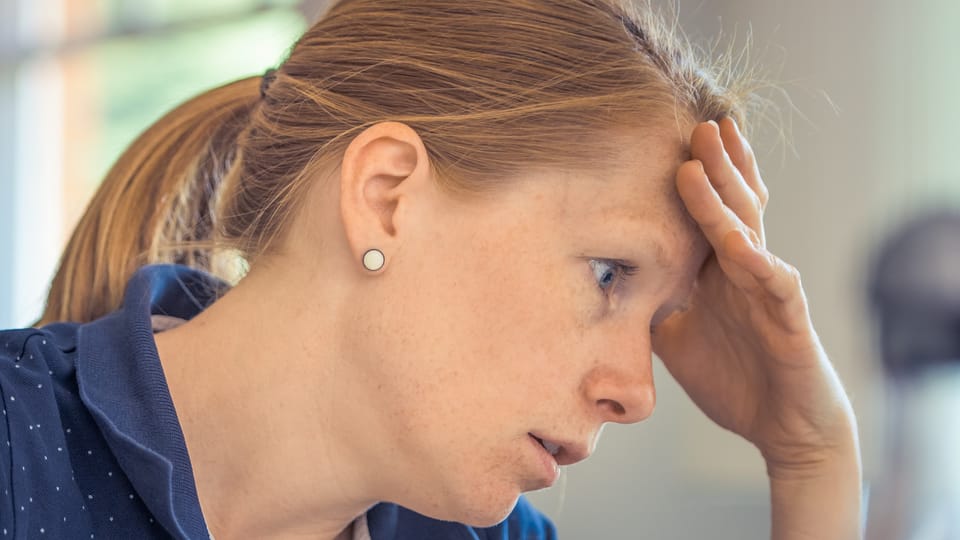
“Enthusiastic workaholics certainly exist. It may harm them in some areas of life, but at the same time they enjoy the work enormously and find it fulfilling. This is definitely better than if the person works excessively, but gets no real joy out of it. The latter is much more damaging. With enthusiastic workaholism, the person actually wants to live that way, and perhaps the negative impact is more on those around them.”
The problems stemming from workaholism are being given attention in many countries of the world and many companies are taking steps to protect their employees. Kateřina Zábrodská worked on a global study on workaholism and says it may come as a surprise to many that women are at higher risk than men.
“The research I took part in was carried out in 91 countries. We had a very large sample—over 30,000 respondents and I can say that, in general, workaholism ranged between 15% among women and about 9% among men. One of the new findings in the latest data is that women are more at risk of workaholism than men, which is a big change compared to the past. And the prevalence rates are fairly similar across the countries surveyed. We assume that one of the reasons may be that women often need to work harder to prove themselves, they want to show that they can do it, so they devote their full time to their work to reach a similar level as men.”






