Brendan McNally on Martha Dodd, “nympho” spy for Soviets who lived in Prague for decades

Martha Dodd was an American spy for the Soviet Union who spent her final decades in Prague. Dodd’s colourful life, and grim end, are the subject of the book Traitor’s Odyssey by Brendan McNally, a US journalist who himself lived in the Czech capital in the 1990s. And, as he explains, McNally first heard of the story of Martha Dodd from a woman who worked for Radio Prague International in the depths of the Cold War era.
I’d like to begin by asking you about Martha Dodd’s pre-Prague years. I guess she first made a mark when she arrived in Berlin in the ‘30s as the daughter of the then new US ambassador?
“Yes. She accompanied her father, along with her brother. The family was very close, very tightly-knit, and had a lot of adventures growing up. The father wanted to bring his kids along for a last adventure together as a family. The kids were already in their late 20s.
“In Berlin she immediately started having affairs with top Nazis.
“In Berlin she immediately started having affairs with top Nazis.”
“Socially speaking, the Dodds were nobodies in Chicago. And Martha absolutely loved all the engraved invitations she got every day, and going out with guys with ‘vons’ in their name.
“So she just went nuts. And she did what she did best – she slept around an incredible amount.
“She alienated everybody at the embassy very quickly and the Nazis all loved her. She was one of them. It went very well.”
Speaking of the Nazis, how did she view what was happening in Germany at that time? She must have seen what was being done to the Jews in those years.
“She saw it but she just didn’t care. The family, being ‘nice American middle class’, were fairly anti-Semitic to begin with. The father was quite anti-Semitic, and she picked it up from him.
“She could not care less what was happening to the Jews. But something changed.”
“She was indifferent. She could not care less what was happening to the Jews, put very simply.
“But somewhere along the line something changed – and that’s the big mystery about her is when did it happen.
“And nobody can really agree when that happened. All they know is that when she came back from a vacation trip to Russia she had been sworn in, or signed up, as an agent of the KGB, or the NKVD as it was then.”
Just to digress for a second, as well as having lovers who were top Nazis, she also was introduced to Hitler, with a view to her and Hitler maybe hooking up.
“[Hitler associate] Putzi Hanfstaengl believed that what Hitler needed was an American wife, to become more acceptable to the world.
“She found Hitler unattractive. He had bad breath, bad teeth.”
“He thought that Martha would be absolutely perfect, because she was good-looking and literate and social and vivacious.
“He set up a little tea date at the Kaiserhof and it went nowhere. It lasted 15, 20, 30 minutes.”
She simply found Hitler unattractive?
“She found him unattractive. He had bad breath, bad teeth. She didn’t find anything attractive about him at all, though she thought his eyes were magnetic.”
You mentioned the fact that she went over to the Russian side. I guess a turning point in her life was when, in Berlin, she also started an affair with a Soviet spy called Boris Vinogradov, who recruited her.
“He recruited her. He was the press secretary at the Russian Embassy.
“He was dashing, a lot of fun. He was also basically what they call a ‘Romeo’, a spy whose job was to seduce wives and girlfriends of top diplomats and other people. And he was apparently quite successful at it.
“Martha just went head over heels for Boris. They were crazy in love: fighting and making love and fighting more and making up – it never stopped with these two.
“At one point Moscow Centre actually sent both of them warnings to just knock it off, stop doing this.
“He was moved to Bucharest and later to Warsaw and she kept visiting him.
“When they were away from each other she had all the affairs she could handle, most notably with the head of French intelligence in Berlin.
“She just couldn’t stop.”
I suppose my biggest question with regard to this part of her life is, Why did she go over to the Soviets? Was she motivated by ideology, by love, by money, or by some other reason?
“She was motivated primarily by love for Boris.
“She went to Russia for a month-long vacation in the summer of 1934 and what she saw there actually horrified her. It was such a god-awful mess and she and Boris fought about it quite a bit afterwards.
“He took her into Moscow Centre for her recruitment. She had discussions with them and then he promptly bailed.
“And she was PO’d that she had to spend the rest of the stupid vacation on a river boat with a bunch of boring people.”
So why then did she serve the other side in this way, for so much of her life?

“She turned against fascism at the behest of both Boris and this woman that she knew in Berlin, named Mildred Fish von Harnack.
“She was an academic at the University of Berlin from Madison, Wisconsin who taught American literature.
“She was everything Martha was not. She seemed to be a monogamous woman, tall, tubercular, incredibly educated. She was a woman of deep conviction.
“And she, more than anyone, probably talked Martha against fascism and into seeing what was happening to the Jews and why it mattered.
“I think she probably played a very, very big role.
“And I think what it really came down to is, in a war you pick your side and you stick with it – you can’t go around switching.
“Martha picked her side and that was it.
“She became ideologically communist in time, or while she was in Berlin. Some of the Moscow Centre files talked about her studying Lenin.
“But Mildred turned her against fascism. I think that’s really what it was.
“And Martha just stuck to one side: She signed on to Moscow and she stayed with that way.”
It didn’t change either when she went back to the US and married a rich man called Alfred Stern, who she in turn brought over to the Soviets.

“He really was already a red millionaire, but she made him actually want to… He asked to sign on to the spy service.
“He saw himself as a man of action and when he saw his girlfriend/wife was an actual agent, he wanted in on that.
“And she spent years doing very little. Through the entire war about all she did was keep lambasting Moscow Centre to give her husband an important job.”
But the couple were being monitored by US law enforcement and in the mid-50s they were subpoenaed – at which point they fled to Prague, where they spent most of the rest of their lives. But somehow they were unimpressed by Prague when they initially arrived?
“She felt Prague was too minor a place and that she deserved a bigger, more important city.”
“I don’t know why – they did not like it at all.
“I think she felt Prague was too minor a place and that she really deserved a bigger, more important city.
“She really wanted Moscow, or if not Moscow Beijing.”
But in both cases the countries refused.
“Both of them refused. They let them visit. But the Russians did not want her in there.
“I don’t know why she didn’t like Prague. I think all their attempts to make friends among the artistic and literary communities of Prague went nowhere.
“People were just too scared. She arrived in 1957, I think, and the show trials were really not that over. Nobody was going to stick their neck out for some weird Americans.

“So they made no friends, it sounds like.
“A Dutch colleague of mine says that they were involved in the Prague orgy scene at some point, but I don’t know any of the details.
“They had no friends. Their only friend was Jiří Hájek, the deputy foreign minister – they would call him when their toilet was clogged.
“They had some connections with the American exile community. But it never really worked because they were rich and all the exiles were poor.”
When it came out in the US that she was a Soviet spy and had fled to Prague, how well known was she in America? For example I came across one tabloid article headlined “The spy queen was a nympho”. Was she a kind of tabloid staple? Was she well known?
“No. Well, she was a well enough known public figure at the time, starting in the ‘30s. So she had a reputation, but she was always kind of minor. She was always second-tier at best.
“And at the time she was uncovered the ‘Red Scare’ had already crested and was starting to recede. So [laughs] her timing in that sense was bad.
“She was just among all this crowd of other people, like the Hollywood Ten leftist screenwriters. So she was one of a crowd, and she didn’t stand out that much.
“And the FBI tried to make a big deal of her and it worked for a while, but it just…
“I mean, the funny thing about Martha is that being a spy like that you’d think that she would ‘have some legs’, as they say in show business. But she didn’t [laughs].”
This leads me to my next question, which is how did you come across the story of Marta Dodd Stern?

“It was my first summer in Prague, in ’92 – I was working for the famous Prague Post and there was a woman working there [Dora Slabá] who was head of research, which meant that she was in charge of all the translators, the translation staff, who were all a bunch of kids.
“She was an old… middle-aged… younger than I am now Sudeten Jew from Ústí nad Labem whose family had fled to England during the war.
“They came back after the war and she became an announcer for Radio Prague at an extremely early age, because her English was so good, and she kept her head down for all those years.
“Anyway one day there weren’t any translators around so she went out with me to interview a guy.
“After that I noticed that a McDonald’s had just opened up on Wenceslas Square, at the bottom of the square, and [laughs] wanting to be ‘Mr Bigshot Amerian’, I said, C’mon Dora, let me buy you a Big Mac Menu.
“She understood my whimsy and we sat there and had a Big Mac outside the McDonald’s and she asked me, Have you ever heard of Martha Dodd?
“I said, No, who’s she. And it turned out Dora Slabá had worked for her for less than two years, right in the late ‘80s. She’d seen a job ad posted in Mladá fronta Dnes for an English-speaking secretary.

“She went to work for her and the woman paid an enormous amount of money. For a while Dora was in heaven, but then she realised she was a nasty old lady.
“She was self-centred, unpleasant, sick all the time, always complaining, lonely, bored, tired. It got nasty.
“The funny thing was that she had almost no friends, except for the ones that she could buy. They would show up.
“But one woman who did show up was Rita Klímová, who she had become friends with. I am not sure how and I’m sure when – it was probably in the 1960s at some point.
“Both of them being fallen away Stalinists they had a lot to talk about, and I think Rita Klímová brought her around to appreciating the Czech country and the Czech anti-communist movement.
“And at some point she became a patron of the Charter 77 people.
“I think Rita Klímová brought her around to the Czech anti-communist movement.”
“And at one point in I think March 1989 – I’m not really sure when – she ordered Dora to go to a demonstration and check it out and report back what she saw.
“Dora didn’t want to go and she was driven there by the chauffeur, who was an StB [secret police] guy.
“They went to this demonstration and he immediately brought her up to the StB crowd that were going to bust up the demonstration in a couple of minutes – and she realised these were the guys who had been guarding the house.
“They were guarding the house the whole time she was there. They all knew her. They thought she was StB herself.”
To interject for a second, I also interviewed Dora Slabá, almost 20 years ago – a very interesting lady. One thing I’m very interested about is you say Martha Dodd was helping out the Czech dissent in secret. But, you write in the book, initially she and her husband were against the Prague Spring, because they were so Communist.
“They hated it. They had just come in from Moscow. They had been living in Cuba for much of the ‘60s and in ’67 or early ’68 they left Cuba and flew back to Prague where they had a house, in Prague 5.
“But they were in Moscow first and this time it absolutely revolted them, how the whole Communist revolution had just turned to garbage.
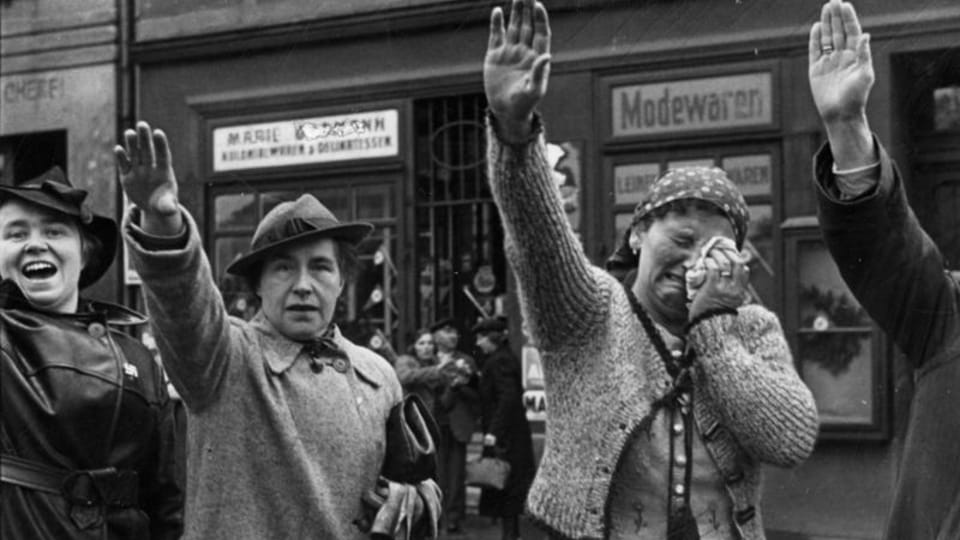
“They were absolutely disgusted by what they saw and who they met and the way everybody treated them; everybody was out for money.
“They couldn’t stand it so they went to Prague. The Prague Spring was just starting and they didn’t like that either, but somewhere along the line they were turned around on it – it might have been by Rita Klímová, I don’t really know.
“So they felt favourably towards it by the time the Russians came in with the tanks.
“But at the same time they were so in their little world, their own little universe, that they didn’t even know about the invasion until later that day. Their adopted son called them from Mexico City and said, What’s going on, have you seen all the tanks?
“They were like, Huh? What tanks?
“And they opened up their windows and they could hear the rumbling of tank treads.
“They initially thought what the Czechs were doing during the Prague Spring was disgusting: ‘a bunch of drunk people having sex everywhere, bell bottoms and blue jeans and Beatles’. They just hated it.
“But something changed and they turned around on that somewhat.”
Again to rewind for a second, you mentioned Rita Klímová, who is a remarkable character in her own right. She was a former Communist, as you say, who had lived in the US during the war and became active in the Czech dissent. She knew Havel and his circle and was later a spokesperson for Civic Forum during the Velvet Revolution, and brought Václav Klaus into the Civic Forum before later going on to be the Czechoslovak ambassador to Washington. But you say that Martha Dodd was channelling money to Rita Klímová, which the dissent were using in some way. What is your evidence for this?
“Only what Dora told me. And just piecing it together, I would imagine that she had paid for that March rally. That’s why she wanted Dora to go and check it out and see how it played.”
What does that mean, she paid for the rally? These people were driven by morality or hatred of communism – they weren’t paid demonstrators.
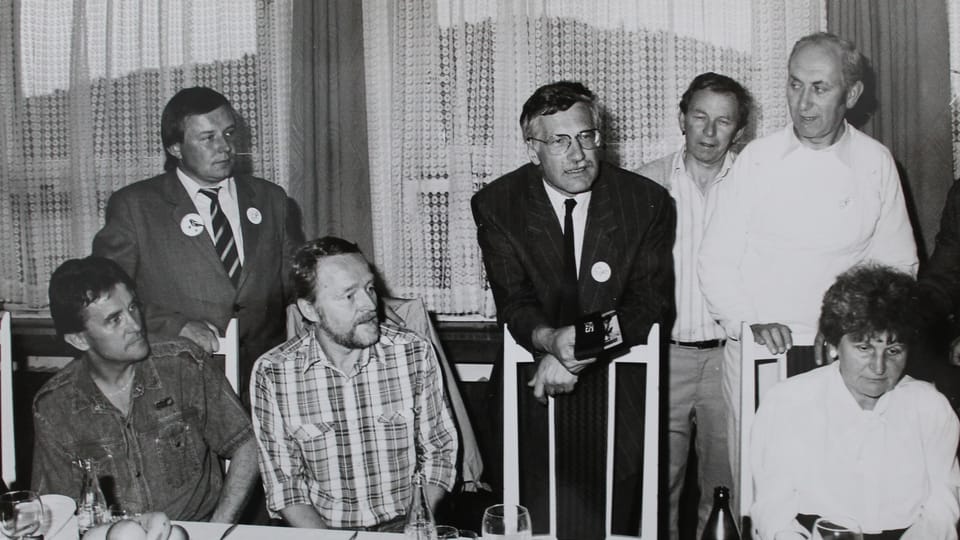
“No, but they probably needed money for logistics.
“And she had Swiss bank accounts. She had a lawyer, who’s still around, who probably arranged payments to them.
“I imagine that was how it was done. He probably also told the StB about it – you know how it is.”
By this time her husband Alfred Stern had died. He died in the mid-1980s, a few years before the Velvet Revolution. But what did the transition to democracy mean in practical terms for the life of Martha Dodd?
“It meant almost nothing. She was too old to enjoy it. She was 82 and in very bad health.
“What it meant was Rita Klímová was gone, so she didn’t have any connection to the dissidents at all, at that point.
“She didn’t really anybody. But what it meant was that people were coming to her door wanting interviews.
“But she was too old and tired to give them. She didn’t want to talk anymore.”
You say in Traitor’s Odyssey that you have reason to believe that the former StB officers assigned to watch Dodd before the revolution were ultimately responsible for her death in August 1990.
“That is correct. Again, this is from Dora Slabá.

“The chauffeur’s name was, naturally, Honza. He was a bit of a man of the world who kind of spoke English.
“And he obviously had a friendly relationship with the StB guys guarding the house; he would slip them cartons of Camel cigarettes when he’d go up to the border to go shopping.
“She ran into him a year or two after the revolution. And he told her, Too bad about the old lady, huh? And Dora said, Yeah, too bad.
“And he asked, Do you want to know what really happened? And he told her that the ‘boys’, the StB guys who’d been guarding the house had got it into their heads that Martha had gold.
“At this point they’d been dismissed; the StB had been disbanded, so they were out of jobs.
“They believed that Martha had gold, which she actually probably didn’t. And they broke in one night, tied her up and demanded that she give them the gold.
“She told them she didn’t have any. They left her on the floor and stole what they could, which was probably some paintings; she had a lot of art.
“And they left her there and she was found the next morning by the housekeeper and taken to the hospital. And she never recovered – she died a day or two later.
“So yes, that was entirely based on what Dora told me.”
You obviously did a huge amount of research in preparing and writing the book. What is your ultimate impression of this woman, Martha Dodd? Do you have any sympathy for her? Or do you think she was a bit of a monster?
“Martha was guilty as you can be, but for somebody as guilty as she was she hadn’t really done much.”
“She wasn’t a monster. I don’t have much sympathy for her… Yeah, Martha was guilty as you can be, but for somebody as guilty as she was she hadn’t really done much.
“She had a sense of herself and her own importance that just was off the charts.
“I find very little sympathetic about her. The fact that she was a writer and she wanted to be famous… She was one of the original fame whores, to tell you the truth.
“But she was a light-weight. She thought she was so important. It’s hard to believe that you could work for the KGB and have such an opinion of yourself.”
It’s such a great story in Traitor’s Odyssey. It could make a good series, or a movie. Is there any chance of anything like that happening?
“I hope so. Interestingly, Tom Hanks bought the rights to In the Garden of Beasts [by Erik Larson], which is also about Martha and her husband.

“It’s about their time in Berlin and it’s a great book – I would recommend it to anybody. But he really pointedly left out the fact of her recruitment to the KGB.
“He put a very tiny fig leaf on that part. He hid it in one sentence that she was accused of espionage.
“But her life would make a great movie for all kinds of strange reasons.
“It’s a really shaggy dog story… But she went decades and didn’t do anything. She was the only person who was in World War II and didn’t do a single thing.
“I’m sure I’ve got the producers just salivating already [laughs].”