2025 Parliamentary Elections - most frequently asked questions

At the beginning of October, Czechs will head to the polls to elect a new Chamber of Deputies, the lower house of Parliament. In a parliamentary democracy like the Czech Republic, the election is decisive for the country’s future. Once the new Chamber is in place, the outgoing government must resign, clearing the way for a new cabinet to be formed based on the election results.
What electoral system does the Czech Republic use?
The Chamber of Deputies is elected by proportional representation. Voters choose from the candidate lists of political parties and movements. The threshold for entry is 5 percent of the national vote, with higher thresholds for coalitions depending on the number of parties involved.
The Czech Republic is divided into 14 electoral districts, matching its administrative regions. Nearly half the population, however, lives in the four largest regions—Prague, Central Bohemia, South Moravia, and Moravia-Silesia—so these districts end up sending almost half the deputies to Parliament. That’s why most party leaders choose to run in one of them.
Are there any changes to this year’s election rules?
Yes. The major change is the introduction of postal voting, which will allow Czech citizens abroad to vote by mail. Until now, voting overseas was possible only in person at Czech embassies and consulates. Since these are relatively few in number, many voters had to travel long distances to cast their ballot.
When exactly will voting take place?

Elections in the Czech Republic are always held from Friday 2 p.m. until Saturday 2 p.m. This year it is Friday, October 3, and Saturday, October 4. The two-day format was introduced in the early 1990s, reportedly to give people time to vote in their place of residence before heading off for their country cottage.
When will the results be known?
The unusual schedule—Friday afternoon and Saturday morning—has the advantage that counting begins on Saturday afternoon, and usually all votes are counted by early evening. This year, the election result should be known by around 8 p.m. on Saturday, October 4.
Do some regions traditionally vote left or right?
Yes. Elections in Prague and Ostrava (Moravia-Silesia) almost always produce different winners. Voters in Prague tend to favor right-wing and liberal parties, while industrial regions lean more toward left-wing or populist movements. In South Moravia and Zlín, by contrast, voters are more inclined than elsewhere to support conservative Christian parties.
Are Czech elections typically marked by protests?
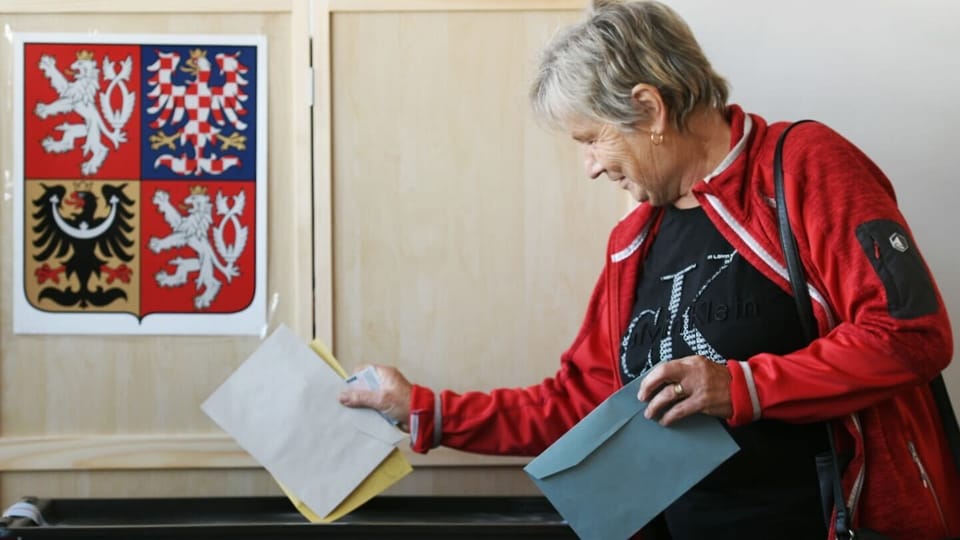
No. Elections are usually calm, and the results are generally respected by both voters and politicians.
What is the expected turnout?
Sociologists and political scientists agree that turnout could play a decisive role in the outcome. In elections to the Chamber of Deputies since 2000, turnout has ranged between 58 and 65 percent. In the last election, held in 2021, 65 percent of eligible voters cast their ballot.
Related
-

Czech Parliamentary Elections 2025
At the beginning of October, Czechs will head to the polls to elect a new Chamber of Deputies, the lower house of Parliament.
-